
Ecco come funziona:
If you’re trying to grow anything in 2025 – whether it’s tomatoes in your backyard or a massive cornfield – you need to understand the difference between organic fertilizer and inorganic fertilizer.
Why? Because choosing the wrong type can literally make or break your growing season.
In fact, I’ve seen gardeners completely destroy their soil by using the wrong fertilizer type. And I’ve also watched farmers transform dead dirt into incredibly productive land by switching their fertilizer strategy.
The good news? Once you understand how these two fertilizer types work, choosing the right one becomes MUCH easier.
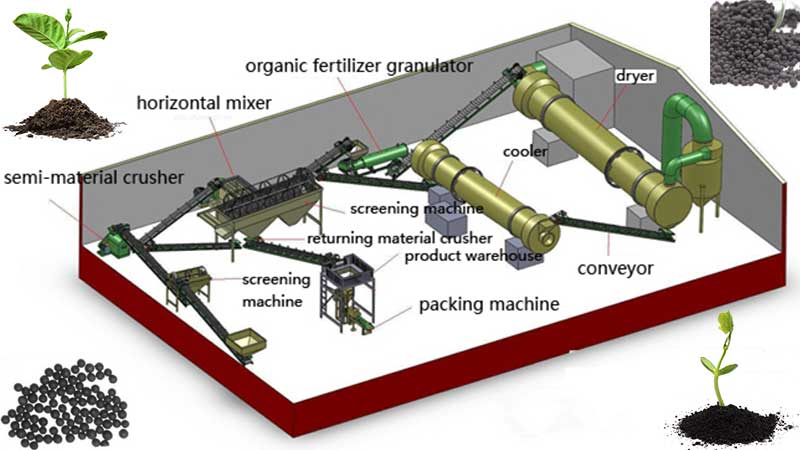
So in this guide, as a professional linea di produzione di fertilizzanti organici manufacturer, I’m going to break down everything you need to know about organic fertilizer vs. inorganic fertilizers.
Immergiamoci in questa storia.

Quick Overview: Organic vs. Inorganic Fertilizers
Before we get into the nitty-gritty details, let me give you the 30,000-foot view.
Fertilizzanti organici come from living things – plants, animals, and natural materials. Think compost, manure, and bone meal.
Inorganic fertilizers (also called synthetic or chemical fertilizers) are manufactured in factories using mineral deposits and chemical processes.
Ma è qui che la cosa si fa interessante:
The real differences go WAY beyond just where they come from.
What Are Organic Fertilizers?
Organic fertilizers are derived from natural, living sources.
These include:
- Animal manure (cow, chicken, sheep)
- Compost
- Farina di ossa
- Pasto di sangue
- Emulsione di pesce
- Seaweed extracts
- Green manure crops
The key thing to understand?
Organic fertilizers don’t just feed your plants. They feed your soil.
Here’s what I mean:
When you add organic matter to soil, it needs to be broken down by microorganisms before plants can use the nutrients. This process takes time (usually weeks or months).
But during that breakdown process, something amazing happens:
The soil structure improves. Water retention gets better. And beneficial microbes multiply like crazy.
It’s like the difference between eating a whole foods diet vs. popping vitamin pills. Sure, both deliver nutrients. But one also provides fiber, enzymes, and other beneficial compounds.
What Are Inorganic Fertilizers?
Inorganic fertilizers are synthetic products manufactured through industrial processes.
Common examples include:
- Ammonium nitrate
- Urea
- Triple superphosphate
- Potassium chloride
- Solfato di ammonio
These fertilizers are basically concentrated nutrients in their purest form.
Think of them as the espresso shot of the fertilizer world – highly concentrated and fast-acting.
The manufacturing process strips nutrients down to their most basic chemical forms. This means plants can absorb them almost immediately.
No waiting. No breakdown process needed.
Which sounds great, right?
Well, yes and no. (More on that in a minute.)
7 differenze chiave tra fertilizzante organico e fertilizzante inorganico
Now let’s get into the meat and potatoes.
Here are the main differences between organic and synthetic fertilizers that’ll actually impact your growing results:
1. Nutrient Release Speed
This is probably the biggest practical difference.
Fertilizzanti organici = Slow release
Inorganic fertilizers = Fast release
With organic options, nutrients trickle out over weeks or months as microbes break down the material.
With synthetic fertilizers? Nutrients are available immediately.
This matters because:
- Plants in crisis need fast nutrients (advantage: inorganic)
- Long-term feeding is better with slow release (advantage: organic)
- Over-fertilization risk is higher with fast-release products
2. Soil Health Impact
Here’s where organic fertilizers really shine.
Materiali organici:
- Build soil structure
- Increase water retention
- Feed beneficial microbes
- Add organic matter
- Improve soil tilth
Inorganic fertilizers:
- Provide nutrients only
- Can damage soil structure over time
- May kill beneficial microbes
- Can cause salt buildup
- Don’t add organic matter
The bottom line? Organic fertilizers are playing the long game with your soil health.
3. Environmental Impact
This is a hot topic in 2025, and for good reason.
Organic fertilizers generally have a lower environmental footprint because:
- They’re renewable resources
- Less energy-intensive to produce
- Lower risk of water pollution
- Support biodiversity
Ma il punto è questo:
Inorganic fertilizers aren’t automatically evil. When used correctly, they can be very efficient. The problem comes from overuse and misapplication.
4. Cost Considerations
Parliamo di soldi.
Initial cost:
- Organic = Often more expensive per pound
- Inorganic = Usually cheaper upfront
Long-term cost:
- Organic = Saves money by improving soil health
- Inorganic = May require increasing amounts over time
I’ve seen farmers cut their fertilizer costs by 50% after switching to organic methods. But it took 3-5 years to see those savings.
5. Nutrient Concentration
This is simple math:
Inorganic fertilizers are WAY more concentrated.
Ad esempio:
- Typical compost: 2-1-2 (NPK)
- Typical synthetic: 20-20-20 (NPK)
That’s a 10x difference in nutrient density.
What this means:
- You need less synthetic fertilizer by weight
- Transport and storage are easier with synthetics
- Application rates are very different
6. Precision and Predictability
If you’re a control freak (like me), you’ll appreciate this difference.
Inorganic fertilizers offer:
- Exact nutrient ratios
- Predictable release rates
- Consistent results
Organic fertilizers provide:
- Variable nutrient content
- Unpredictable release timing
- Results depend on soil conditions
7. Application Flexibility
How and when you can apply these fertilizers varies significantly.
Organic fertilizers:
- Best applied before planting
- Can be used as mulch
- Safe for most application methods
- Lower burn risk
Fertilizzanti sintetici:
- Can be applied anytime
- Require careful measurement
- High burn potential
- More application restrictions
When to Use Organic Fertilizers
Based on my experience (and tons of research), organic fertilizers work best when:
You’re building long-term soil health
If you’re planning to grow in the same spot for years, organic is the way to go.
You have time to wait
Organic fertilizers won’t save a nitrogen-deficient plant overnight.
You’re growing food crops
Many gardeners prefer organic for vegetables and fruits.
Your soil needs improvement
Poor soil structure? Low organic matter? Organic fertilizers address both.
You want to minimize environmental impact
Organic options are generally more eco-friendly.
When to Use Inorganic Fertilizers
Sometimes synthetic is the right choice:
You need fast results
Plant showing deficiency symptoms? Inorganic fertilizers act quickly.
You’re growing in containers
Limited soil volume benefits from concentrated nutrients.
You need precise nutrient ratios
Some crops have very specific nutrient requirements.
You’re dealing with severe deficiencies
Sometimes you need the nuclear option.
Cost is a major factor
Synthetic fertilizers often cost less upfront.
The Hybrid Approach (My Personal Favorite)
Here’s what most people miss:
You don’t have to choose just one.
In fact, combining organic and inorganic fertilizers often gives the best results.
Here’s how I do it:
- Build the foundation with organic matter
- Add compost annually
- Use cover crops
- Apply organic mulch
- Supplement with synthetics when needed
- Quick nitrogen boost in spring
- Address specific deficiencies
- Support heavy feeders
- Monitor and adjust
- Regular soil testing
- Watch plant health
- Reduce synthetic use over time
This approach gives you the best of both worlds.
Common Myths Debunked
Let me clear up some misconceptions:
Myth #1: “Organic is always safer”
Nope. Improperly applied organic fertilizers can still burn plants or pollute water.
Myth #2: “Synthetic fertilizers are poison”
Not true. They’re just concentrated nutrients. The dose makes the poison.
Myth #3: “Organic fertilizers don’t work as well”
They work differently, not worse. Long-term results are often better.
Myth #4: “You need more organic fertilizer”
By weight, yes. By results over time? Often no.
Making the Right Choice for Your Situation
So which should you choose?
It depends on:
- Your goals (short-term yield vs. long-term health)
- Your timeline (need results now vs. can wait)
- Your budget (upfront vs. long-term costs)
- Your values (environmental concerns)
- Your growing conditions (soil type, climate, crops)
There’s no one-size-fits-all answer.
Il bilancio
Understanding the difference between organic fertilizer and inorganic fertilizer isn’t just academic knowledge – it directly impacts your growing success.
Organic fertilizers excel at building soil health, supporting beneficial microbes, and providing sustainable nutrition over time. They’re playing the long game.
Inorganic fertilizers deliver fast, predictable results with precise nutrient ratios. They’re the quick fix when you need it.
The smartest growers? They use both strategically.
Start with organic materials to build healthy soil. Supplement with synthetics when specific needs arise. Monitor results and adjust accordingly.
Because at the end of the day, the best fertilizer is the one that helps you achieve your growing goals – whether that’s prize-winning tomatoes or a sustainable farming operation.
Now stop reading and go grow something awesome.


 Italian
  English
  Spanish
  French
  Russian
  German