
Ever wonder how those nutrient-packed, eco-friendly fertilizers that transform barren soil into thriving farmland are made? Here’s the deal: the bio organic fertilizer production process isn’t just mixing compost in a bucket. It’s a science-backed, meticulously engineered system that turns waste into “black gold” for farmers. And in 2025, with soil health crises and climate change accelerating, mastering this process isn’t optional—it’s essential. Let me break down exactly how it works, step by step.
As a professional organic fertilizer production line manufacturer, I’ve spent years studying soil ecosystems (and even got my hands dirty running small-scale trials). In my experience, skipping one critical phase—like proper fermentation or bio-inoculation—can turn premium fertilizer into worthless sludge. Sound good? Let’s dive in.

Why Bio Organic Fertilizer? (Spoiler: Your Soil Will Thank You)
Before we geek out on production, let’s talk why this matters. Chemical fertilizers? They’re like energy drinks for plants—short-term buzz, long-term burnout. They degrade soil structure, pollute waterways, and zap microbial life. Bio organic alternatives? They rebuild. Here’s the kicker:
- Restores microbial diversity (1 gram of healthy soil contains 1 billion bacteria!).
- Locks in moisture (up to 60% better water retention than synthetic options).
- Slashes greenhouse gases by diverting organic waste from landfills.
The bottom line? This isn’t farming—it’s soil regeneration. And it starts with nailing the production process.
Bio Organic Fertilizer Production Process
Raw Material Prep: Trash to Treasure
Pro tip: Your fertilizer’s quality lives or dies here. Not all waste is created equal. I’ve seen backyard setups fail because they used pizza boxes (yes, really) instead of nutrient-rich organics. Here’s how to prep like a pro:
The Gold Standards for Raw Materials
- Animal manure (chicken, cow, sheep): High in nitrogen, but must be fresh.
- Crop residues (rice hulls, corn stalks): Carbon heroes for balancing compost.
- Industrial organics (brewery waste, food scraps): Packed with micronutrients.
Avoid sludge or plastics—they’ll wreck your microbial brew.
Pre-Treatment: Don’t Skip This!
Raw materials often arrive soggy or chunky. Here’s how to fix that:
- Dehydrate manure using a screw press (moisture ≤ 60%).
- Crush stalks/husks into 2-5mm pieces for faster breakdown.
- Blend your “recipe” (Ideal carbon-to-nitrogen ratio: 25:1).
Fun fact: In 2025, smart sensors can auto-admix ratios—no more guesswork!
Fermentation: Where Microbes Work Their Magic
This is the heart of the process. Without proper composting, you’ve got inert sludge. But nail it? You get humus teeming with life. Let me explain…
Step-by-Step Fermentation Breakdown
- Inoculate with thermophilic microbes (I use Bacillus subtilis or commercial starters).
- Pile into windrows (1.5m tall, 2m wide) or closed bioreactors.
- Monitor religiously (because microbes are picky):
- Temperature: Ramp to 55-65°C for 72 hours (kills pathogens).
- Moisture: Keep at 50-60% (squeeze test: damp sponge, no drips).
- Oxygen: Turn piles every 3 days (or use forced-aeration tanks).
Why does this work? Heat-loving bacteria devour organics, converting complex carbs into stable humus. Pro tip: If your pile smells like ammonia, it’s anaerobic—turn it STAT!
Maturity Checks (Don’t Rush This!)
Fermentation takes 3-6 weeks. Test for readiness with:
- Color/Smell: Dark brown, earthy (not sour or rotten).
- Temperature: Drops to ambient levels.
- Germination test: Seeds sprout >90% in it vs. soil.
Granulation: From Powder to Professional-Grade Pellets
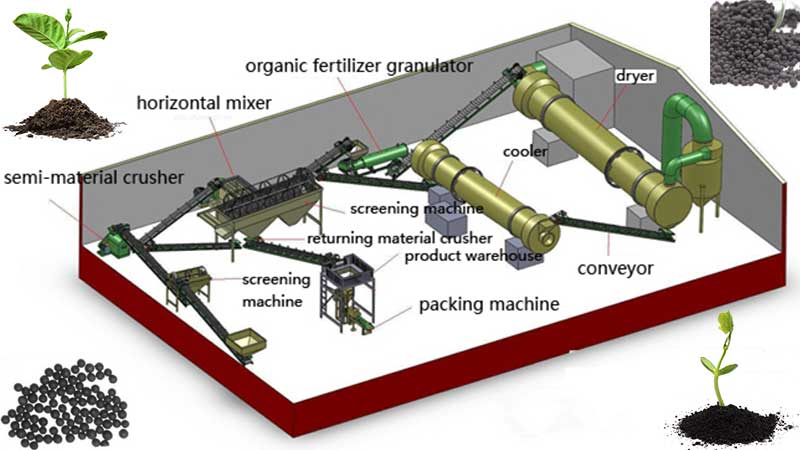
Here’s where things get industrial. Powdered bio-fertilizer works, but granules are easier to spread, store, and sell. In 2025, granulators are smarter and greener—think solar-powered systems!
The Granulation Workflow
- Crush compost into fine powder (≤2mm particles).
- Dry to ≤14% moisture (belt dryers save energy vs. rotary).
- Form pellets using:
- Disc granulators (for small batches)
- Rotary drum machines (high-capacity output)
- Screen for consistency (4-6mm pellets are ideal).
Pro tip: Granulation prevents nutrient leaching, boosts slow-release properties, and enhances soil amendment uniformity.
Bio-Inoculation: Supercharging Your Fertilizer
This step defines “bio” organic fertilizer. Raw compost has microbes, but inoculation adds specific strains that turbocharge soil health. Think of it as a probiotic shot for your garden.
Top Microbial Strains to Add
| Strain Type | Example | Role |
|---|---|---|
| N-fixing | Azotobacter | Converts air nitrogen into plant food |
| P-solubilizing | Pseudomonas | Unlocks rock phosphorus |
| Disease fighters | Trichoderma | Suppresses root rot fungi |
Application method: Spray liquid inoculant onto cooled granules (coating ensures survival). Storage is critical—keep bags in cool, dark places (<30°C) to preserve microbes.
Packaging & Storage: Locking in Freshness
Mistake I’ve seen: Storing inoculated fertilizer in humid sheds. Microbes suffocate, and you’ve got expensive dirt. Here’s the fix:
- Pack in UV-block bags (prevents microbe die-off from light).
- Stack on pallets (never directly on concrete—moisture kills!).
- Shelf life: 6-12 months if stored right.
Why This Process Beats Synthetics (Especially in 2025)
Recent FAO data shows bio-organic farms yield 20% more long-term than chemical-reliant ones. Here’s why:
- Builds soil carbon (critical for climate resilience).
- Cuts fertilizer runoff by 60%, protecting rivers.
- Saves farmers money (DIY setups pay back in 2 seasons).
The bottom line? Healthy soil = drought-resistant crops, nutrient-dense food, and farms that thrive for generations.
Common Pitfalls to Dodge
Want your operation to flop? Ignore these. Otherwise, heed my hard-earned lessons:
- Pathogen paradise: Skip the 65°C temp phase? Hello, E. coli.
- Over-granulating: High heat during pelletizing kills microbes.
- Cheap inoculants: Lab-tested strains > random compost tea.
A 2024 study found 82% of failed bio-fertilizer batches traced back to sloppy fermentation. Don’t be a stat!
Final Thoughts
The bio organic fertilizer production process transforms waste into wealth—for your soil, your crops, and the planet. It’s not just composting; it’s a controlled, microbial-powered alchemy. Start small, respect the phases (especially fermentation!), and in 2025, your soil will thank you. Ready to turn your organic scraps into black gold? Share your biggest takeaway below—let’s grow together!


 English
  Spanish
  French
  Russian
  German
  Italian