
So you want to start an organic fertilizer production business?
Smart move.
The organic fertilizer market is EXPLODING right now. In fact, the global organic fertilizer market is expected to hit $15.9 billion by 2025.
But here’s the thing:
Most people jump into this business without a solid organic fertilizer production business plan.
And they fail. Hard.
Today, as a professional organic fertilizer production line manufacturer, I’m going to show you EXACTLY how to create an organic fertilizer production business plan that actually works.
(Including real examples and templates you can use right away.)
Let’s dive in.

Why Organic Fertilizer Production is a Goldmine in 2025
Here’s a stat that’ll blow your mind:
The organic food market is growing at 14% annually. And guess what all those organic farms need?
Yup. Organic fertilizer.
But that’s not even the best part.
Check this out:
- Chemical fertilizer prices have shot up 80% since 2020
- Government regulations are getting stricter on synthetic fertilizers
- Farmers are desperate for sustainable alternatives
- You can literally turn waste into cash
I recently talked to a guy who started with $50,000 and now runs a $2 million organic fertilizer operation.
His secret?
A rock-solid business plan.
Organic Fertilizer Production Business Plan: 7 Essential Components
Look:
You can’t just wing it in the fertilizer business.
You need a REAL plan that covers every angle.
Here’s what your plan needs to include:
1. Executive Summary (The Make-or-Break Section)
This is where most people screw up.
They write some boring corporate jargon that puts investors to sleep.
Don’t do that.
Instead, nail these key points:
- Your unique value proposition (What makes your fertilizer different?)
- Target market size (Use real numbers, not guesses)
- Financial projections (Be realistic, not optimistic)
- Funding needs (Exactly how much and what for)
For example:
“GreenGrow Organics will produce 1,000 tons of premium vermicompost monthly, targeting the $250 million regional organic farming market with 40% lower prices than imported alternatives.”
See how specific that is?
2. Market Analysis That Actually Matters
Forget generic market reports.
You need LOCAL data.
Here’s what to research:
Local demand factors:
- Number of organic farms within 100 miles
- Current fertilizer usage rates
- Price points they’re paying
- Seasonal demand patterns
Competition analysis:
- Who’s already selling to these farms?
- What are their weaknesses?
- Where are the gaps?
Pro tip: Call 20 local farmers. Ask them what they hate about their current fertilizer supplier. That’s your opportunity.
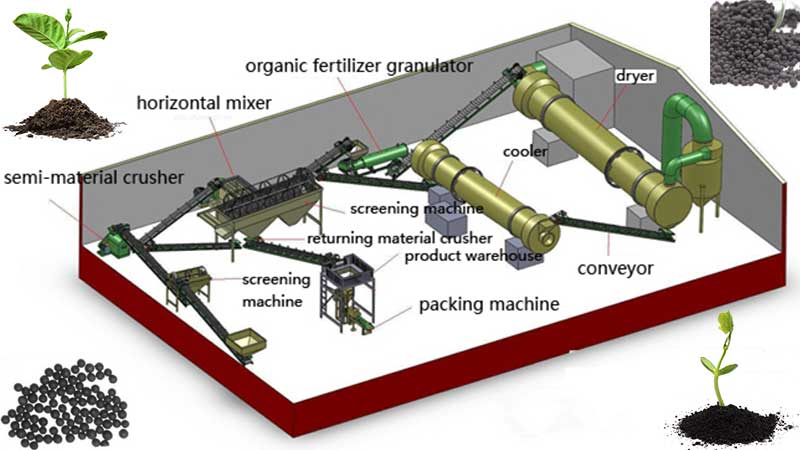
3. Production Process and Technology
This is where the rubber meets the road.
Your production process determines EVERYTHING:
- Your costs
- Your quality
- Your capacity
- Your profit margins
Here’s a simple breakdown:
For composting operations:
- Waste collection and sorting
- Shredding and mixing (C:N ratio of 30:1)
- Windrow formation
- Regular turning (every 3-5 days)
- Curing (4-8 weeks)
- Screening and packaging
For advanced operations:
Add these steps:
- Nutrient enrichment
- Pelletizing
- Quality testing
- Custom blending
The key?
Start simple. Scale later.
4. Financial Projections That Pass the Sniff Test
Listen:
Investors can smell BS from a mile away.
Your financials need to be:
- Conservative
- Detailed
- Based on real data
Here’s what you MUST include:
Startup costs:
- Equipment: $50,000-$200,000
- Land/facility: $20,000-$100,000
- Working capital: $30,000-$50,000
- Permits/licenses: $5,000-$15,000
Operating costs (monthly):
- Raw materials: $5,000-$15,000
- Labor: $8,000-$20,000
- Utilities: $2,000-$5,000
- Transportation: $3,000-$8,000
Revenue projections:
- Year 1: Break even
- Year 2: 15-20% profit margin
- Year 3: 25-30% profit margin
(These are realistic numbers based on actual operations.)
5. Marketing Strategy That Actually Works
Here’s the truth:
“Build it and they will come” is a fairy tale.
You need a REAL marketing strategy.
What works in 2025:
Direct farm sales:
- Visit farms personally
- Offer free soil testing
- Provide trial batches
- Build relationships
Digital presence:
- Google My Business listing
- Simple website with prices
- WhatsApp for orders
- Facebook groups for farmers
Strategic partnerships:
- Agricultural cooperatives
- Farm supply stores
- Organic certification bodies
- Government agricultural programs
6. Operations Plan
This is your day-to-day playbook.
Cover these bases:
Facility requirements:
- 2-5 acres for small operation
- Concrete pad for composting
- Storage building
- Office space
Equipment needs:
- Shredder ($5,000-$15,000)
- Turner ($10,000-$30,000)
- Screen ($3,000-$10,000)
- Loader ($15,000-$40,000)
- Packaging equipment ($5,000-$20,000)
Staffing plan:
- Production manager
- 2-3 operators
- Sales person
- Driver/delivery
Quality control:
- Testing protocols
- Nutrient guarantees
- Certification requirements
7. Risk Management
Nobody talks about this.
But it’s CRUCIAL.
What could go wrong?
- Raw material shortage
- Seasonal demand swings
- Competition from imports
- Regulatory changes
- Equipment breakdown
For each risk, have:
- A probability assessment
- An impact analysis
- A mitigation strategy
- A contingency plan
Organic Fertilizer Production Business Plan: Step-by-Step Launch Process
Alright, you’ve got your plan.
Now what?
Here’s your roadmap:
Phase 1: Pre-Launch (Months 1-3)
Month 1:
- Finalize business plan
- Secure initial funding
- Scout locations
- Research equipment suppliers
Month 2:
- Obtain permits and licenses
- Sign facility lease
- Order equipment
- Hire core team
Month 3:
- Install equipment
- Source raw materials
- Conduct test runs
- Develop initial product batches
Phase 2: Soft Launch (Months 4-6)
This is where you work out the kinks.
Key activities:
- Produce small batches
- Test with friendly farmers
- Refine processes
- Gather feedback
- Adjust formulations
Phase 3: Scale Up (Months 7-12)
Time to hit the gas.
Focus on:
- Increasing production volume
- Building customer base
- Optimizing costs
- Establishing distribution
- Hitting revenue targets
Common Mistakes That Kill Fertilizer Businesses
I’ve seen dozens of organic fertilizer startups fail.
Here’s what they did wrong:
Mistake #1: Starting Too Big
Everyone wants to be the next big thing.
But here’s reality:
Start with ONE product. Master it. Then expand.
Mistake #2: Ignoring Quality Control
One bad batch can ruin your reputation forever.
Invest in:
- Proper testing equipment
- Standard operating procedures
- Quality checkpoints
- Third-party verification
Mistake #3: Poor Financial Management
Cash flow kills more businesses than competition.
Tips:
- Keep 6 months of operating expenses in reserve
- Invoice immediately
- Offer early payment discounts
- Monitor accounts receivable weekly
Mistake #4: Neglecting Customer Education
Farmers are skeptical of new products.
You need to:
- Provide detailed product information
- Offer application guidance
- Show real results
- Build trust over time
Your Next Steps
Look:
The organic fertilizer business is legit.
But only if you do it right.
Here’s what to do TODAY:
- Download my free business plan template (link below)
- Research your local market (use the checklist I provided)
- Talk to 5 potential customers (get real feedback)
- Calculate your startup costs (be conservative)
- Find a mentor (someone already in the business)
The bottom line?
Success in organic fertilizer production comes down to three things:
Planning. Execution. Persistence.
Get your organic fertilizer production business plan right, and you’re already ahead of 90% of your competition.
Now stop reading and start doing.
Your future fertilizer empire awaits.


 English
  Spanish
  French
  Russian
  German
  Italian