
So you’re looking to invest in a compound fertilizer granulating machine.
Smart move.
But here’s the thing: choosing the wrong granulator can tank your fertilizer production before it even starts. I’ve seen it happen dozens of times.
The good news? Picking the right compound fertilizer granulating machine doesn’t have to be complicated. In fact, once you know what to look for, the decision becomes pretty straightforward.
In this guide, as a professional fertilizer granulator machine manufacturer, I’ll walk you through exactly how to choose the perfect compound fertilizer granulating machine for your specific needs. No fluff. Just the stuff that actually matters.

Why Your Granulator Choice Matters (More Than You Think)
Here’s something most equipment suppliers won’t tell you:
Your granulator is the heart of your entire fertilizer production line.
Pick the wrong one, and you’ll deal with:
- Inconsistent granule quality
- Higher production costs
- Constant maintenance headaches
- Unhappy customers
But when you nail the selection? That’s when things get interesting.
I recently talked to a fertilizer plant manager who switched from a disc granulator to a rotary drum system. His production efficiency jumped 40% in three months.
That’s the power of choosing right.
5 Critical Factors to Choose a Compound Fertilizer Granulating Machine
Let’s cut to the chase.
After analyzing hundreds of fertilizer production setups, I’ve found that successful granulator selection comes down to five key factors:
1. Your Production Capacity Requirements
This is where most people mess up.
They either go too small (and bottleneck their entire operation) or too big (and waste money on unnecessary capacity).
Here’s my simple formula:
Target Daily Output × 1.2 = Your Minimum Capacity Requirement
Why the 1.2 multiplier? Because you need breathing room for maintenance, peak demand, and growth.
For example:
- Small-scale operation (1-5 tons/hour): Disc granulator or small rotary drum
- Medium-scale (5-15 tons/hour): Standard rotary drum granulator
- Large-scale (15+ tons/hour): Multiple drum systems or specialized NPK granulators
2. Raw Material Characteristics
Your raw materials dictate everything.
I can’t stress this enough: different materials need different granulation approaches.
Here’s what to consider:
Moisture Content
- High moisture (25-30%): Go with wet granulation methods
- Low moisture (<10%): Dry granulation works better
- Variable moisture: You’ll need flexible equipment
Particle Size
- Fine powders: Require more binding agents
- Mixed sizes: Need pre-processing equipment
- Uniform materials: Easier to granulate
Chemical Properties
- Acidic materials: Need corrosion-resistant equipment
- Heat-sensitive compounds: Avoid high-temperature processes
- Reactive ingredients: Special handling required
3. Granulation Method Selection
Now we’re getting into the meat of it.
There are three main granulation technologies for compound fertilizers:
Wet Granulation (Most Common)
This includes:
- Rotary drum granulators
- Disc/pan granulators
- Mixing granulators
Pros:
- High granulation rate (up to 90%)
- Uniform granule size
- Good for most NPK formulations
Cons:
- Requires drying equipment
- Higher energy consumption
- More complex process
Dry Granulation
Mainly double roller extrusion granulators.
Pros:
- No drying needed
- Lower operating costs
- Compact production line
Cons:
- Lower granulation rate
- Less spherical granules
- Limited formulation flexibility
Steam Granulation
The newest kid on the block.
Pros:
- Superior granule quality
- Energy efficient
- Minimal dust
Cons:
- Higher initial investment
- Requires skilled operators
- Not suitable for all formulations
4. Desired Granule Properties
What kind of fertilizer pellets do you want to produce?
This isn’t just about aesthetics. Your target market has specific requirements:
Size Requirements
- Agriculture: 2-4mm (most common)
- Lawn care: 1-2mm
- Specialty crops: Custom sizes
Shape Preferences
- Spherical: Best flow properties, premium price
- Irregular: Acceptable for many applications
- Cylindrical: From extrusion processes
Strength Standards
- Standard: 10-25N crushing strength
- High-strength: 25-40N for long-distance transport
- Ultra-hard: 40N+ for specialized applications
5. Your Budget Reality
Let’s talk money.
A complete granulation system isn’t just the granulator. You’re looking at:
- Main granulator: 30-40% of total cost
- Drying system: 20-25%
- Screening equipment: 10-15%
- Material handling: 15-20%
- Installation and setup: 10-15%
Budget Breakdown by Scale:
- Small system (1-3 tons/hour): $50,000-150,000
- Medium system (5-10 tons/hour): $200,000-500,000
- Large system (15+ tons/hour): $800,000-2,000,000+
Pro tip: Don’t just look at purchase price. Calculate the total cost of ownership over 5 years, including energy, maintenance, and labor.
Real-World Equipment Comparison
Let me break down the most popular options:
Rotary Drum Granulator
The workhorse of the industry.
Best for:
- Large-scale NPK production
- Consistent, round granules
- Continuous operation
Real performance data:
- Capacity: 5-30 tons/hour
- Granulation rate: 70-85%
- Power consumption: 5.5-37 kW
I’ve seen these run for 20+ years with proper maintenance.
Disc Granulator
The precision option.
Best for:
- Small to medium operations
- When you need size control
- Visible process monitoring
Real performance data:
- Capacity: 0.5-8 tons/hour
- Granulation rate: 85-93%
- Power consumption: 3-11 kW
Great for specialty fertilizers where uniformity matters.
Double Roller Extrusion Granulator
The efficiency champion.
Best for:
- Dry granulation needs
- Heat-sensitive materials
- Lower operating costs
Real performance data:
- Capacity: 1-10 tons/hour
- Granulation rate: 85-90%
- Power consumption: 15-75 kW
Perfect when you want to skip the drying step entirely.
How to Choose Right Compound Fertilizer Granulating Machine
Here’s my step-by-step process for choosing right:
Step 1: Define Your Requirements
Document these specifics:
- Daily/annual production targets
- Raw material specifications
- Granule quality standards
- Available budget range
- Space constraints
Step 2: Analyze Your Materials
Get lab tests for:
- Moisture content
- Particle size distribution
- Chemical composition
- pH levels
- Bulk density
Step 3: Match Technology to Needs
Use this decision matrix:
- High moisture + large scale = Rotary drum
- Low moisture + cost-sensitive = Double roller
- Small scale + flexibility = Disc granulator
- Premium quality + efficiency = Steam granulation
Step 4: Calculate ROI
Factor in:
- Equipment cost
- Installation expenses
- Operating costs (energy, labor, maintenance)
- Expected revenue increase
- Payback period
Step 5: Validate with References
Always, always check references. Ask about:
- Actual vs. promised performance
- Maintenance requirements
- Support quality
- Hidden costs
Common Mistakes to Avoid
I’ve seen these kill projects:
Mistake #1: Choosing Based on Price Alone
The cheapest option often becomes the most expensive when you factor in downtime and quality issues.
Mistake #2: Ignoring Future Growth
Building a system at 100% capacity from day one leaves no room for growth. Always plan for 20-30% expansion.
Mistake #3: Overlooking Support Systems
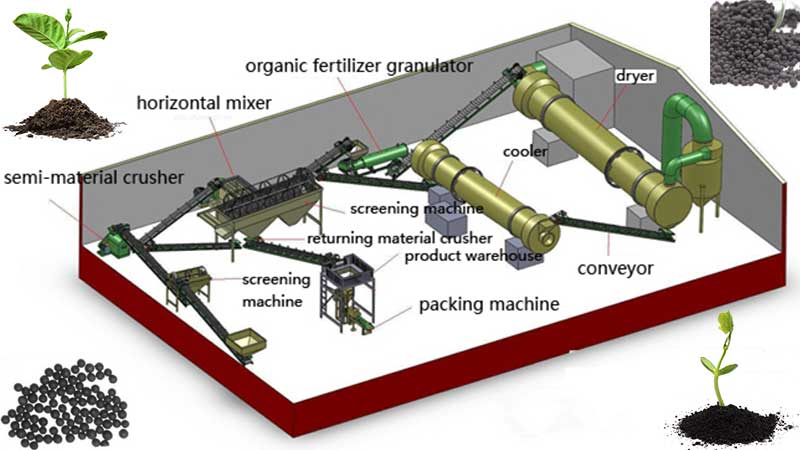
Your granulator needs proper feeding, drying, screening, and cooling systems. Don’t skimp on these.
Mistake #4: Forgetting About Maintenance
Some machines need daily attention. Others run for weeks unattended. Know what you’re signing up for.
The Bottom Line
Choosing the right compound fertilizer granulating machine comes down to matching your specific needs with the right technology.
There’s no one-size-fits-all solution.
But when you:
- Understand your production requirements
- Know your raw materials inside and out
- Match the technology to your needs
- Consider the total cost of ownership
- Plan for future growth
You’ll make a decision that sets your operation up for long-term success.
Remember: the best granulator is the one that reliably produces quality granules at the lowest total cost for YOUR specific situation.
Take the time to get this right. Your future self (and your accountant) will thank you.
Because at the end of the day, choosing the right compound fertilizer granulating machine isn’t just about buying equipment—it’s about building a profitable, sustainable fertilizer production business.


 English
  Spanish
  French
  Russian
  German
  Italian