
Ever wondered what happens to all that plastic waste from manufacturing? Or how companies turn large chunks of material into perfectly sized granules?
That’s where granulator machines come in.
What is a Granulator Machine Used For?
What is a granulator machine used for? A granulator machine reduces large materials into smaller, uniform particles through cutting, crushing, and grinding processes. These versatile machines serve industries from plastic recycling to pharmaceuticals, transforming everything from plastic bottles to sensitive documents into manageable granules.
I’ve spent years working with various industrial equipment, and granulators consistently prove to be one of the most valuable tools in material processing. As a professional fertilizer granulator machine manufacturer, let me break down everything you need to know about these workhorses.
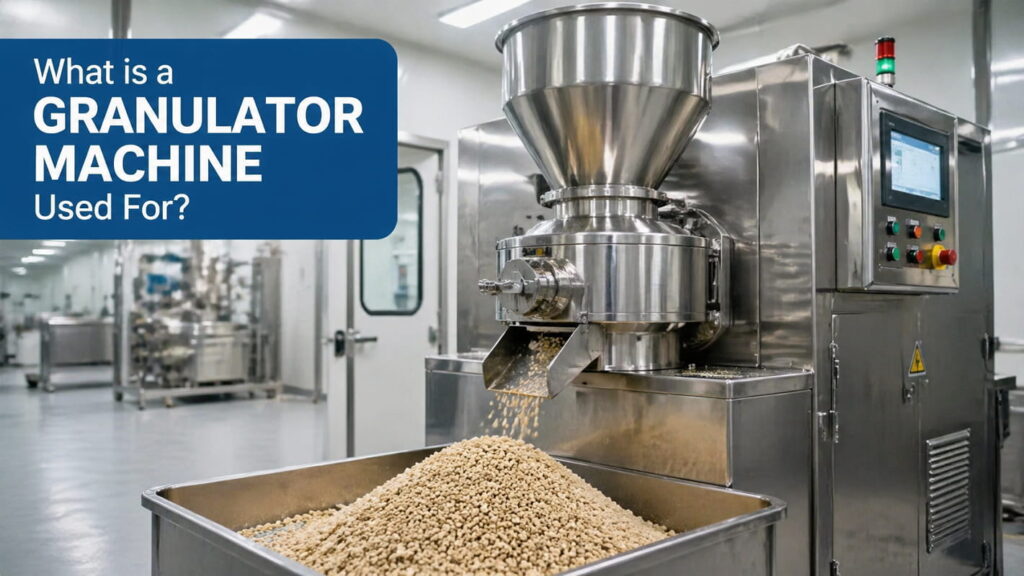
How Granulator Machines Actually Work
Here’s the thing about granulators:
They’re deceptively simple machines that deliver complex results.
The basic process looks like this:
The Core Process
First, you feed material into the hopper. Think of it as a funnel that guides your material into the cutting chamber.
Inside that chamber? That’s where the magic happens.
Rotating blades (we call them rotor blades) spin at high speeds. These work together with stationary blades to create a scissor-like cutting action.
The material gets chopped repeatedly until it’s small enough to fall through a screen at the bottom. That screen determines your final particle size.
Real-World Example
I recently visited a plastic recycling facility that processes 10,000 pounds of bottles daily. Their central granulator reduced full-sized bottles to 6mm flakes in under 30 seconds.
That’s the power of proper size reduction technology.
5 Major Applications of Granulator Machines
Granulators aren’t one-trick ponies. They serve multiple industries with surprising versatility.
1. Plastic Recycling Operations
This is the big one.
Plastic recycling facilities use granulators to break down:
- Post-consumer bottles and containers
- Production waste and reject parts
- Film and sheet materials
- Rigid plastics from automotive parts
The resulting plastic regrind gets melted down and formed into new products. It’s circular economy in action.
2. Pharmaceutical Manufacturing
Here’s something interesting:
Pharmaceutical companies use specialized granulators to create uniform drug particles. This ensures consistent dosing and improved drug absorption.
High-shear granulators mix powders with binding solutions to create granules perfect for tablet pressing.
3. Document and Data Destruction
Security matters.
Industrial shredding through granulation offers the highest level of document destruction. The machines reduce papers and even hard drives to particles so small that reconstruction becomes impossible.
I’ve seen classified documents turned into confetti-sized pieces in seconds.
4. Food Processing Industry
Food manufacturers use granulators for:
- Creating uniform spice blends
- Processing grains and cereals
- Reducing sugar crystals to powder
- Preparing ingredients for further processing
The key here? Food-grade materials and easy-to-clean designs prevent contamination.
5. Chemical and Fertilizer Production
Chemical plants rely on granulators to create consistent particle sizes for:
- Fertilizer pellets
- Chemical compounds
- Catalyst materials
- Raw material preparation
Uniform granulation means predictable reaction rates and product performance.
Types of Granulators You’ll Encounter
Not all granulators are created equal.
Different applications demand different designs.
Central Granulators
These are the heavy-hitters.
Central granulators handle large volumes and tough materials. They’re typically stationed in one location where all waste gets processed.
Think of them as the main recycling hub in a facility.
Beside-the-Press Granulators
Compact and convenient.
These smaller units sit right next to injection molding machines. They immediately process reject parts and sprues, turning waste into reusable material on the spot.
Low-Speed Granulators
Here’s what makes these special:
Low-speed operation means less noise, less dust, and more consistent output. They’re perfect for materials that might melt under high-speed friction.
I’ve found them particularly effective for soft plastics and rubber materials.
Screenless Granulators
These operate without the traditional screen system.
Instead, they use precise blade geometry to achieve consistent particle size. The result? Less maintenance and no screen changes.
Key Benefits of Using Granulator Machines
Let me tell you why companies invest in these machines:
Cost Reduction Through Waste Management
Every pound of material you recycle is a pound you don’t have to buy new.
One automotive parts manufacturer I worked with saved $200,000 annually by granulating and reusing their production waste.
Improved Material Handling
Large, bulky materials are hard to store and transport.
Granulated materials:
- Take up less space
- Flow better through equipment
- Mix more uniformly
- Transport more efficiently
Environmental Impact
This matters more than ever.
Granulators enable true circular manufacturing. Instead of sending materials to landfills, you’re creating valuable feedstock for new products.
Quality Control
Uniform particle size means consistent product quality.
Whether you’re making plastic parts or pharmaceutical tablets, granulation ensures every batch meets specifications.
Choosing the Right Granulator for Your Needs
Here’s where many people get stuck.
The wrong granulator choice can cost you time, money, and headaches.
Consider Your Material Type
Hard plastics need different blade configurations than soft films.
Abrasive materials require hardened steel or carbide blades. Food products demand stainless steel construction.
Match the machine to your material.
Volume Requirements
Be realistic about your processing needs.
A beside-the-press unit handling 50 pounds per hour won’t cut it if you’re processing tons of material daily.
Particle Size Requirements
Your end use determines your target size.
Injection molding regrind typically needs 6-8mm particles. Rotational molding can handle larger sizes. Pharmaceutical applications might need sub-millimeter uniformity.
Maintenance Considerations
Every granulator needs maintenance.
But some designs make it easier:
- Quick-access cutting chambers
- Easy blade changes
- Self-cleaning features
- Accessible screens
The easier the maintenance, the more uptime you’ll enjoy.
Common Challenges and Solutions
Let’s address the elephants in the room.
Blade Wear
This is inevitable, especially with abrasive materials.
Solution: Implement a regular inspection schedule. Keep spare blades on hand. Consider upgraded blade materials for tough applications.
Contamination Issues
Different materials don’t play well together.
Solution: Thorough cleaning between material changes. Some facilities dedicate granulators to specific materials to avoid cross-contamination entirely.
Inconsistent Output Size
Usually caused by worn screens or improper blade gap.
Solution: Regular screen inspection and replacement. Maintain proper blade clearances according to manufacturer specifications.
The Future of Granulation Technology
The industry isn’t standing still.
Smart Monitoring Systems
New granulators include sensors that monitor:
- Blade wear
- Motor load
- Material flow
- Output quality
This data helps predict maintenance needs before problems occur.
Energy Efficiency
Modern designs use less power while delivering better results.
Variable speed drives adjust motor speed based on load. Improved blade geometries require less force to cut.
Automation Integration
Granulators now integrate with larger automation systems.
They communicate with upstream and downstream equipment, adjusting operation based on production demands.
Making the Investment Decision
Here’s the bottom line:
Granulators aren’t cheap. But they pay for themselves through material savings and improved efficiency.
ROI Calculation
Consider these factors:
- Material cost savings from recycling
- Labor reduction through automation
- Space savings from size reduction
- Disposal cost elimination
Most facilities see payback within 12-18 months.
New vs. Used Equipment
Quality used granulators can offer excellent value.
Just ensure:
- Complete maintenance records
- Availability of replacement parts
- Proper inspection before purchase
- Warranty options
Best Practices for Granulator Operation
Success comes from proper operation.
Safety First
Granulators are powerful machines.
Always:
- Lock out power during maintenance
- Use proper feeding techniques
- Wear appropriate PPE
- Follow manufacturer guidelines
Regular Maintenance Schedule
Develop and stick to a maintenance routine:
- Daily visual inspections
- Weekly blade checks
- Monthly thorough cleaning
- Annual complete overhauls
Operator Training
Well-trained operators make all the difference.
They’ll:
- Recognize problems early
- Operate more efficiently
- Perform basic maintenance
- Reduce safety incidents
Conclusion
What is a granulator machine used for? It’s a critical tool for modern material processing, enabling everything from plastic recycling to pharmaceutical manufacturing. These machines transform waste into resources, improve material handling, and support sustainable manufacturing practices.
The right granulator can revolutionize your material processing operations. Whether you’re recycling plastics, destroying sensitive documents, or preparing pharmaceutical compounds, understanding these machines helps you make informed decisions.
Remember: successful granulation isn’t just about having the right equipment. It’s about matching that equipment to your specific needs, maintaining it properly, and operating it safely.
The investment in proper granulation technology pays dividends through reduced waste, improved efficiency, and better product quality. In today’s economy, that’s not just smart business—it’s essential for staying competitive.


 English
  Spanish
  French
  Russian
  German
  Italian
  Turkish