
Let me guess…
You’re here because you’ve seen the opportunity in the fertilizer market. The global demand is soaring. But when you started looking into building a plant, you got hit with a dizzying range of price tags—from $30,000 to over $1 billion.
What gives? Is a small-scale operation even viable? Can you get a return without a nine-figure investment?
Here’s the deal: The fertilizer manufacturing plant cost isn’t a single number. It’s a “choose your own adventure” story, where your choices on technology, scale, and location directly write the check.
I’ve analyzed dozens of project plans and industry reports. And in this guide, as a professional fertilizer production line manufacturer, I’ll break down the real costs you’ll face in 2026, strip away the fluff, and show you how to plan an investment that actually makes sense.
Sound good? Let’s dive in.
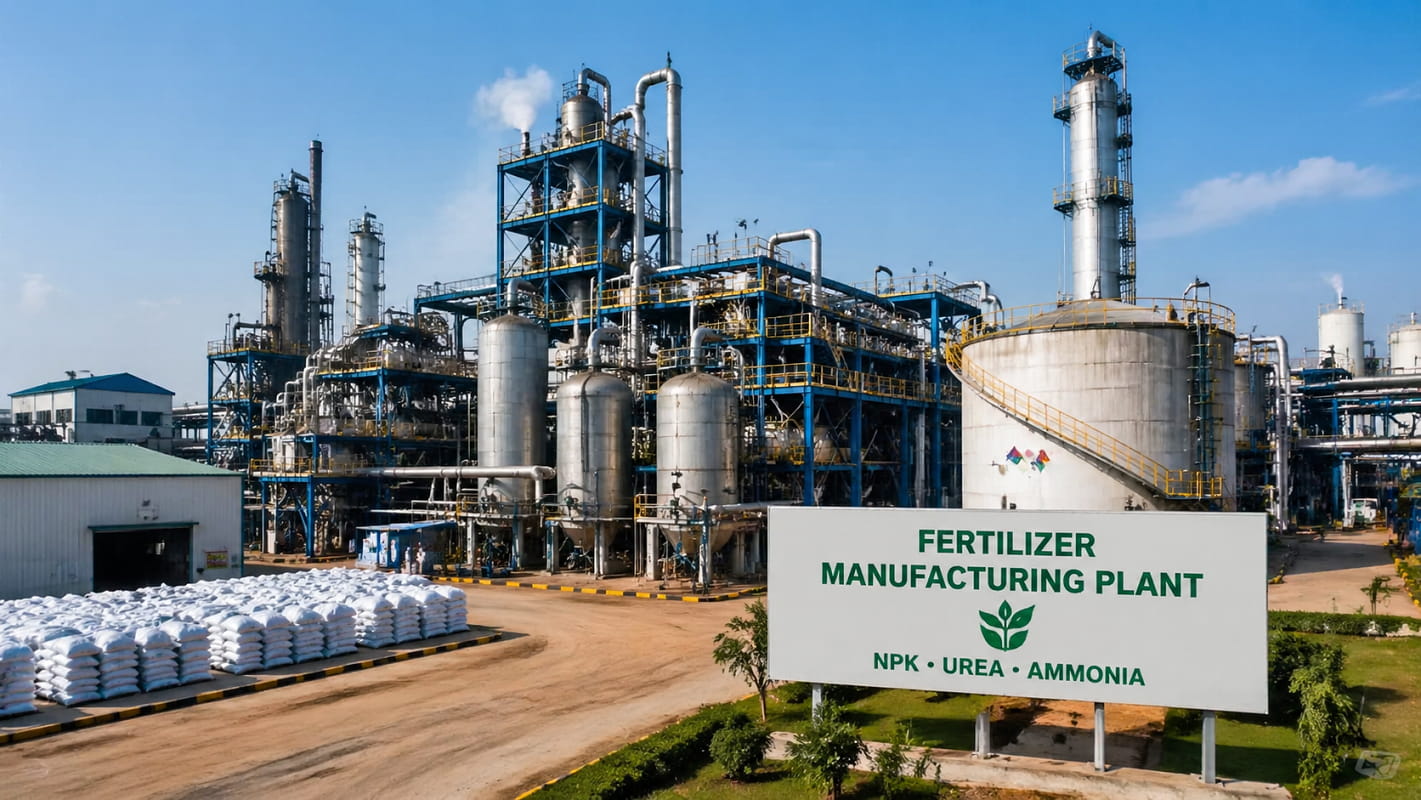
Why Does Fertilizer Plant Cost Vary So Wildly?
Think about it this way.
The cost difference between a food truck and a five-star restaurant is huge. They both “make food,” but the scale, equipment, real estate, and overhead are worlds apart.
It’s the same with fertilizer plants.
A small, organic compost line turning local manure into powder is a mechanics workshop. A world-scale industrial nitrogen complex using the Haber-Bosch process is a SpaceX launch facility.
The primary cost drivers are:
- Technology: Using natural gas as a feedstock vs. turning compost piles.
- Scale: Producing 1 ton per hour vs. 1,000 tons per hour.
- Automation: Manual bagging vs. a fully robotic packaging line.
- Compliance: Meeting local organic standards vs. stringent international environmental and safety regulations for chemical plants.
In 2026, with rising focus on sustainable agriculture and volatile energy markets, these factors matter more than ever. Getting the plant setup cost right from the start is the difference between profit and a very expensive lesson.
Fertilizer Manufacturing Plant Cost: The 2026 Breakdown
Let’s get concrete. Here’s what your capital expenditure (CAPEX) looks like based on the type of plant you want to build.
| Plant Category | Estimated CAPEX (USD) | Common Production Output | Best For |
|---|---|---|---|
| Small-Scale Organic | $60,000 – $200,000 | 1–5 tons per hour (TPH) | Local farms, waste management startups |
| Medium NPK Blending | $200,000 – $1.5M | 10–20 TPH (Dry/Liquid) | Regional supply, custom blend services |
| Large Granular NPK | $2M – $20M+ | 100,000+ tons per year | National distribution, major agribusiness |
| Biofertilizer Plant | $35,000 – $660,000 | 1–20 TPH (Bacteria-based) | Sustainable ag focus, high-margin niche |
| Industrial Nitrogen | $1B – $3B+ | 1M+ tons per year | Global commodity production |
Pro Tip: Don’t just look at the price tag. Look at the production output. A $500,000 organic granulation line might produce 10 TPH of high-value fertilizer, while a $500,000 NPK blending line might produce 20 TPH of standard blends. The revenue potential per dollar invested is the metric that matters.
The 4 Factors That Actually Determine Your Cost
Forget the generic quotes. Your final fertilizer factory setup cost hinges on these four pillars.
1. Plant Type & Core Technology
This is your biggest decision. It sets the floor for your investment.
- Organic Fertilizer Lines: Lower tech floor. Cost is in composting equipment (turners), grinders, mixers, and maybe a granulator. A simple powder line can start under $100,000.
- Compound (NPK) Fertilizer Lines: Higher tech. Requires precise batching systems, chemical mixers, granulation (like a rotary drum granulator), drying, cooling, and coating. Starts around $200,000 for blending and escalates quickly with granulation.
- Liquid Fertilizer Lines: Focus on tanks, reactors, filtration, and filling systems. Less bulk material handling, but more precision in formulation. CAPEX ranges from $30,000 to $500,000+.
- Nitrogenous Fertilizer Plants: This is heavy industrial chemistry (Haber-Bosch process). The cost is dominated by the synthesis loop, high-pressure reactors, and massive steam systems. It’s a billion-dollar game.
2. The Hidden Budget Killers: Infrastructure & Compliance
The machine price is just the start. I’ve seen projects go 30% over budget here.
- Facility & Utilities: You need a building with chemical-resistant flooring, high-power electrical connections, water access, and possibly natural gas lines. This can eat up 20-25% of your CAPEX.
- Environmental & Safety Systems: Dust collectors, scrubbers, ventilation (HVAC), and wastewater treatment aren’t optional. In 2026, regulations are tighter.
- Permitting & Engineering: The paperwork has a price. Environmental impact assessments, zoning permits, and safety certifications can account for 5-10% of your initial cost. Always include a 10-15% contingency fund for compliance surprises.
3. Operating Costs (OpEx): The Profit Engine
A cheap plant can be bankrupted by high operating costs. Here’s the 2026 breakdown:
- Raw Materials: 70-80% of total OpEx. This is your main variable. Natural gas prices dictate nitrogen fertilizer cost. Rock phosphate prices swing. Local organic waste (manure, crop residue) can often be sourced at very low cost, giving organic plants a major edge.
- Energy: The second biggest bite. Granulation dryers and coolers are energy hogs. Pro Tip: Newer, energy-efficient designs and waste heat recovery can cut this cost by 20-30%.
- Labor: A modern, automated 10 TPH line can run with 3-5 skilled operators per shift. Labor might be only 10-15% of OpEX. The less automated your line, the higher this cost climbs.
4. Scale & Automation: The Efficiency Lever
This is where you control your destiny.
- Small Scale (1-5 TPH): Higher cost per ton produced, but lower total risk. Often manual or semi-automated. Ideal for proving a business model locally.
- Medium Scale (5-20 TPH): The sweet spot for many. You can afford PLC automation in batching and packaging, which slashes labor costs and improves consistency. Your cost per ton drops significantly.
- Large Scale (20+ TPH): Lowest cost per ton, but massive upfront CAPEX and market demand is required. Requires full plant automation and robotics.
Step-by-Step: How to Plan Your Fertilizer Plant Budget in 2026
Don’t just throw darts at a price list. Follow this plan.
Step 1: Lock Down Your “Why” and “Who For”
Are you solving a local manure problem? Supplying specialty organic blends? Producing bulk NPK for row crops? Your market dictates your plant type. This is the most important step you’ll take.
Step 2: Choose Your Technology Path
Based on your “why,” map the process:
- Organic Powder: Composting → Crushing → Screening → Packaging.
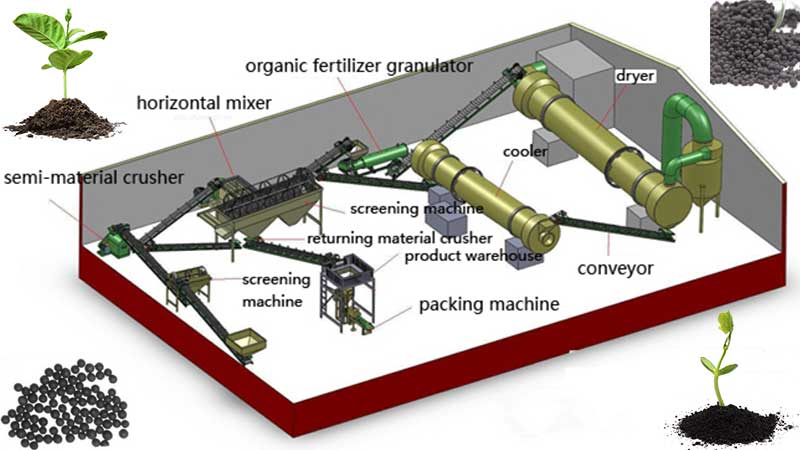
- Organic Granules: Adds mixing, granulation (disc or drum), drying, cooling, coating.
- NPK Granules: Precision batching → mixing → granulation → drying → cooling → screening → coating → packaging.
Each added step increases CAPEX but also product value and marketability.
Step 3: Get Real Quotes on Equipment
Now, get specific. For a $1M – $2M mid-sized NPK or organic granulation plant, your budget will typically look like this:
- Production Machinery (30-40%): Granulator, dryer, cooler, mixer, crusher.
- Infrastructure & Facility (20-25%): Building prep, utilities, environmental controls.
- Automation & Packaging (15%): PLC control system, automated bagging, palletizing.
- Installation & Permitting (10-15%): Don’t forget this!
- Contingency (10%): For the unexpected. Trust me, you’ll need it.
Step 4: Model Your Operating Costs
Build a spreadsheet. Model scenarios with different raw material and energy costs. How much does a 10% spike in natural gas do to your NPK plant’s margins? This exercise will show you the real risk in your project.
Step 5: Plan for Land and Logistics
A 5-10 TPH granular fertilizer system needs 1,500 – 5,500 sq. meters. Land cost is hyper-local. An industrial zone might cost $20-100/sq.m annually. Factor this in yearly. Is it near your raw materials and customers? Transportation costs eat profit fast.
2026 Trends That Will Impact Your Cost
The industry isn’t static. These shifts are creating new opportunities and costs right now.
1. Decentralized Green Ammonia: Smaller-scale ($50M–$100M) plants using electrolysis (green hydrogen) are emerging. They avoid natural gas price volatility and can be built closer to users. This is a new mid-tier option for nitrogen production.
2. The Automation Mandate: With labor costs rising, automation is no longer a luxury. The ROI on automated batching and packaging is under 2 years for most medium-scale plants. It’s a CAPEX that lowers OPEX.
3. Circular Economy Bonuses: Using waste streams (manure, food waste, digestate) isn’t just green—it’s often cheaper. Equipment to process these materials (dehydrators, separators, specialized compost turners) is seeing rapid innovation and becoming more cost-effective.
4. Compliance as a Core Cost: Environmental buffer zones, carbon emission tracking, and advanced wastewater systems are baked into modern plant design. Factor this in early; retrofits are always more expensive.
Common Cost Mistakes (And How to Avoid Them)
I’ve seen these pitfalls sink projects:
- Mistake 1: Focusing only on equipment CAPEX and ignoring OpEx. A cheap, inefficient granulator will cost you double in energy bills.
- The Fix: Do a total lifecycle cost analysis over 5 years.
- Mistake 2: Buying a “naked” production line without auxiliary systems (dust control, conveyors, packaging). The “extras” can equal the cost of the main machines.
- The Fix: Get turnkey quotes that include all necessary auxiliary equipment and installation.
- Mistake 3: Underestimating the space, power, and permitting needed. You can’t run a 20 TPH plant on a small lot with residential power.
- The Fix: Engage with local authorities and an engineering consultant before you buy equipment.
The Bottom Line? It’s About Strategic Investment
So, what’s the final answer? What is the fertilizer manufacturing plant cost?
It’s the strategic investment required to securely claim your slice of a growing market.
For a serious commercial operation in 2026, you’re likely looking at:
- $100,000 – $500,000 for a small-to-medium organic or powder NPK plant serving a local region.
- $500,000 – $2,000,000 for a competitive, automated granular fertilizer plant (organic or NPK) with strong regional potential.
- $2,000,000+ for a large-scale operation aiming for national distribution.
The goal isn’t to find the cheapest option. It’s to build a facility that produces a ton of fertilizer at the lowest possible total cost, while meeting the quality demands of your target customer.
Start with your market. Work backward to the technology. Crunch the numbers on both CAPEX and OPEX. And build with 2026’s trends—not 2016’s rulebook—in mind.
Your roadmap to a profitable fertilizer business starts with understanding the true fertilizer manufacturing plant cost. Now you have the blueprint.


 English
  Spanish
  French
  Russian
  German
  Italian
  Turkish