
Setting up a bio fertilizer manufacturing plant? I get it. The first question on your mind is probably: “How much is this going to cost me?”
Here’s the deal:
A bio fertilizer manufacturing plant cost typically ranges from $30,000 for a basic setup to over $1 million for a fully automated facility. But that’s just scratching the surface.
As a professional fertilizer production line manufacturer, let me break down exactly what you’re looking at – and more importantly, how to get the best bang for your buck.
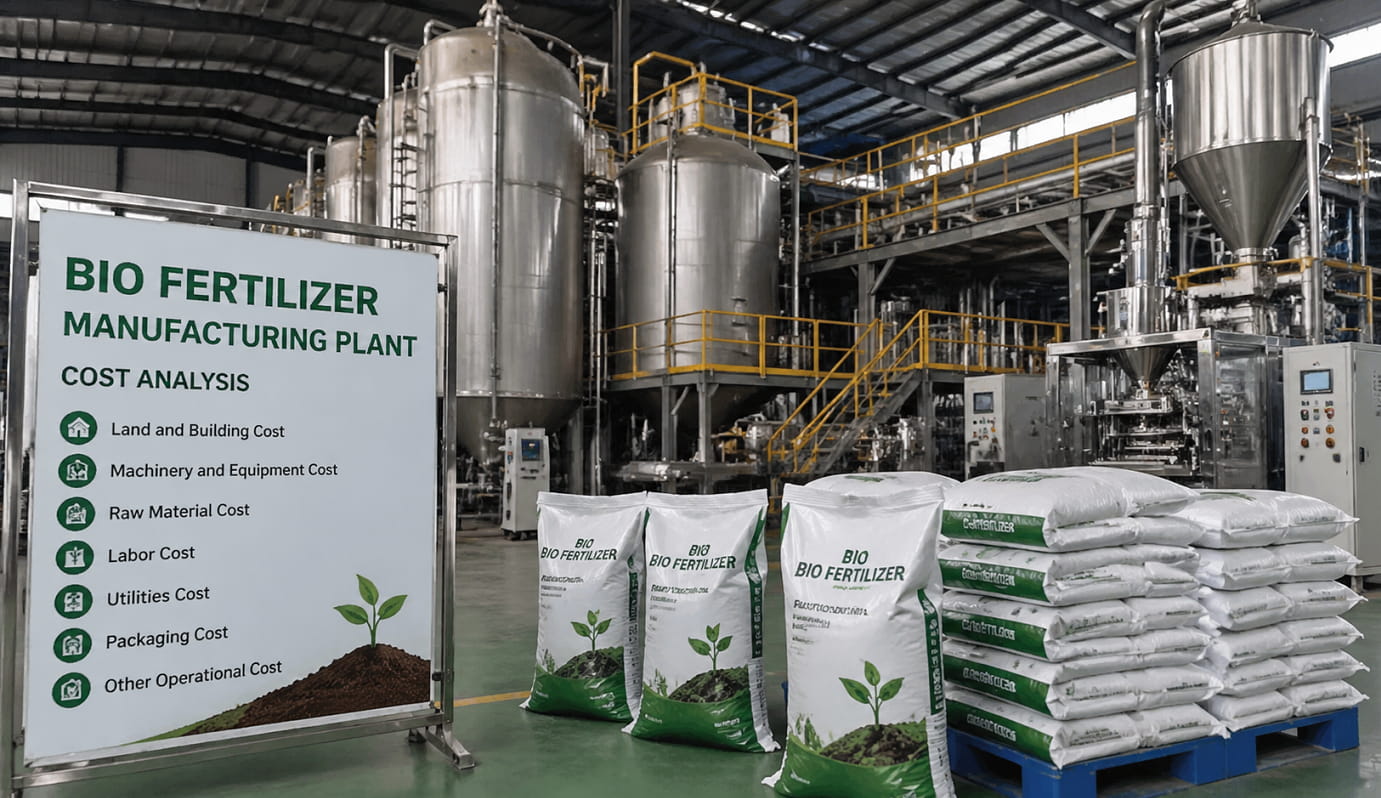
What Drives Bio Fertilizer Production Costs?
Before we dive into specific numbers, you need to understand what actually impacts your investment.
Think of it like building a house. The final price depends on:
- Production capacity (1 ton/hour vs. 20 tons/hour makes a HUGE difference)
- Product type (powder, liquid, or granular – each requires different equipment)
- Level of automation (manual operations vs. fully automated systems)
- Location and land costs (varies wildly by region)
- Raw material sourcing (proximity to organic waste sources matters)
Here’s what most people miss:
The equipment purchase is just 40-60% of your total investment. The rest? That’s infrastructure, permits, working capital, and those sneaky “unexpected” costs that always pop up.
Real Cost Breakdown by Production Scale
Let’s get specific. I’ve analyzed dozens of bio fertilizer plant setups, and here’s what the numbers actually look like:
Small-Scale Operations (1-5 tons/hour)
Total Investment: $30,000 – $190,000
For powder production:
- Basic equipment: $30,000 – $45,000
- Simple setup with composting, crushing, screening
- Manual or semi-automatic operations
- Perfect for testing the market
For granular production:
- Equipment cost: $100,000 – $190,000
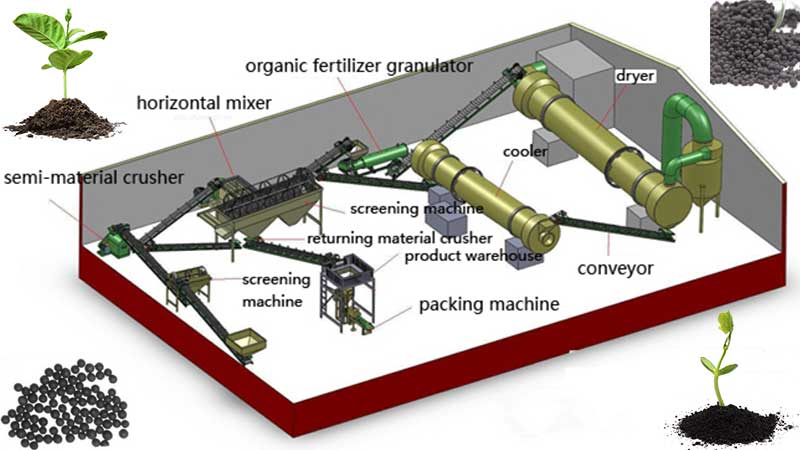
- Includes granulation, drying, cooling systems
- Higher profit margins but bigger upfront investment
Pro Tip: Start with powder if you’re budget-conscious. You can always upgrade to granules later.
Medium-Scale Production (5-10 tons/hour)
Total Investment: $120,000 – $380,000
This is where things get interesting.
You’re looking at:
- More automated systems
- Better quality control capabilities
- Equipment that can handle multiple product types
- Lab setup for maintaining microbial cultures ($75,000 alone)
A real-world example? A 10 t/h facility in Brazil cost $370,000 total, including:
- Crawler-type compost turner
- Vertical crusher
- Drum granulator with coating system
- Full drying and cooling line
- Automated packaging
Large Industrial Plants (15-20 tons/hour)
Total Investment: $400,000 – $1,000,000+
Now we’re talking serious production.
These facilities feature:
- Fully automated production lines
- Multiple product capabilities
- Advanced quality control systems
- High-speed packaging lines
But here’s the thing:
At this scale, your bio fertilizer manufacturing plant cost varies dramatically based on technology choices. A basic 15 t/h setup might cost $400,000, while a state-of-the-art facility with the same capacity could exceed $700,000.
Hidden Costs Nobody Talks About
Here’s where first-time investors get surprised.
Beyond the equipment, you need to budget for:
1. Land and Infrastructure (20-30% of total cost)
- Small plants need 500-1,000 m²
- Large facilities require 5,000+ m²
- Don’t forget utilities, roads, and drainage
2. Working Capital (First 6 months)
- Raw materials: 50-60% of operational costs
- Utilities: 15-20% (those dryers are energy-hungry!)
- Labor: Plan for 7-10 employees minimum
3. Compliance and Certification
- Environmental permits
- Organic certification (if applicable)
- Safety compliance
- Lab accreditation
I’ve seen plants fail because they didn’t budget for these “extras.”
Smart Ways to Reduce Your Investment
Want to slash your costs without sacrificing quality? Here’s how:
Start with powder production. Seriously. Granulation equipment (dryers, coolers, coating machines) can double your investment. You can add these later once you’re profitable.
Location matters – big time. Set up near organic waste sources. One client saved 30% on raw materials just by locating next to a large dairy farm.
Consider modular systems. Many suppliers now offer “plug-and-play” units. Start small, add capacity as you grow. It’s like building with LEGOs – way more flexible than traditional setups.
Buy smart, not cheap. Quality equipment lasts longer. I’ve seen bargain hunters spend twice as much replacing broken machines within two years.
Product Type Impact on Costs
This is crucial:
Powder Bio Fertilizer
- Lowest equipment cost
- Simplest process
- Lower energy consumption
- BUT: Lower market price, shorter shelf life
Liquid Bio Fertilizer
- Moderate investment ($50,000 – $300,000)
- Requires fermentation tanks and bottling lines
- Growing market demand
- Higher value per unit
Granular Bio Fertilizer
- Highest equipment cost
- Complex process (needs drying, cooling)
- Premium market pricing
- Best for large-scale operations
The bottom line? Your product choice dramatically affects your bio fertilizer manufacturing plant cost.
ROI and Payback Period
Let’s talk money – the return on your investment.
Based on current market data:
- Small plants: 2-3 year payback period
- Medium facilities: 18-24 months
- Large operations: 12-18 months (with good management)
Key profit drivers:
- Product quality (premium bio fertilizers command 40-60% higher prices)
- Market positioning (organic certification adds 20-30% to selling price)
- Operational efficiency (automated systems reduce labor costs by 40%)
- Raw material costs (free waste = higher margins)
Equipment Essentials Checklist
Here’s exactly what you’ll need:
For All Plants:
- Compost turner/fermenter
- Crusher/grinder
- Screening equipment
- Mixing system
- Packaging machine
Additional for Granular:
- Granulator
- Rotary dryer
- Cooling machine
- Coating equipment (optional but recommended)
For Liquid Production:
- Fermentation tanks
- Filtration systems
- UV sterilizers
- Filling equipment
Choosing the Right Supplier
This can make or break your project.
Look for suppliers who offer:
- Complete turnkey solutions
- Installation and training
- After-sales support
- Proven track record (ask for references!)
- Customization options
Red flags to avoid:
- Unusually low prices (usually means corners cut)
- No installation support
- Limited warranty
- Poor communication
Future-Proofing Your Investment
The bio fertilizer industry is evolving fast. Here’s how to stay ahead:
1. Plan for expansion. Buy land with growth in mind. Adding capacity later is easier than relocating.
2. Invest in quality control. A good lab setup maintains product consistency – crucial for building brand reputation.
3. Consider automation. Labor costs only go up. Automated systems pay for themselves through reduced operational expenses.
4. Stay flexible. Modular equipment lets you adapt to market changes quickly.
Action Steps for Investors
Ready to move forward? Here’s your roadmap:
- Define your target market – Local farmers? Export? This shapes everything else.
- Secure raw material sources – Lock in suppliers before you build.
- Get preliminary quotes – Contact 3-5 equipment suppliers for detailed proposals.
- Visit operating plants – Nothing beats seeing real facilities in action.
- Develop a business plan – Include 20% contingency in your budget.
- Start permit applications – These take longer than you think.
The Bottom Line
Your bio fertilizer manufacturing plant cost depends on dozens of factors, but here’s what matters most:
Start with a clear vision of your target market and production goals. Choose equipment that matches your budget AND growth plans. Don’t cut corners on quality – it’ll cost you more long-term.
Whether you’re investing $30,000 or $1 million, success comes down to smart planning, quality equipment, and understanding your market.
The bio fertilizer industry is booming. With the right approach, your manufacturing plant can capture a profitable slice of this growing market.
Remember: Every successful bio fertilizer plant started with someone asking the same questions you’re asking now. The difference? They took action.
Your move.


 English
  Spanish
  French
  Russian
  German
  Italian
  Turkish