
- Key Takeaways
- Compound fertilizer production lines cost $10,000-$1.2M+ depending on capacity (1-40 t/h), granulation method, and automation level.
- Hidden costs like installation (10-15% of equipment), utilities, and permits can add 30-50% to your base investment.
- Smart buyers can optimize costs by starting with blending systems ($50K-$80K) before adding granulation, buying quality equipment where it counts, and factoring in typical ROI of 20-30% annually with 2-4 year payback periods.
If you’re looking to invest in a compound fertilizer production line, the first question on your mind is probably: “How much is this going to cost me?”
I get it. The compound fertilizer production line price can vary wildly depending on what you need. We’re talking anywhere from $10,000 for a basic setup to over $1 million for a large-scale operation.
But here’s the deal:
Understanding the true cost involves more than just looking at price tags. You need to consider capacity, equipment quality, granulation methods, and dozens of other factors that can make or break your investment.
In this guide, I’ll break down everything you need to know about compound fertilizer production line pricing. Plus, I’ll share some insider tips on how to get the best value for your money.
Sound good? Let’s dive in.
What Exactly Determines Compound Fertilizer Production Line Cost?
Before we talk numbers, let’s get clear on what actually drives the price of these systems.
Here are the main cost factors:
1. Production Capacity
This is the big one.
A small 1-3 tons per hour (t/h) production line might cost you $10,000 to $80,000. But if you need a 40 t/h monster of a system? You’re looking at $1 million or more.
Here’s a quick breakdown:
- Small Scale (1-3 t/h): $10,000 – $80,000
- Medium Scale (5-10 t/h): $30,000 – $150,000
- Large Scale (10-30+ t/h): $180,000 – $1.2M+
The capacity you choose depends entirely on your market demand and business goals.
2. Granulation Method
Your choice of granulation method has a HUGE impact on price.
Wet granulation (using rotary drums or disc granulators) typically costs more than dry granulation. Why? Because wet granulation requires additional drying and cooling equipment.
For example, a dry granulation line using a double roller press might save you 30-40% compared to a wet granulation system of the same capacity.
3. Equipment Components
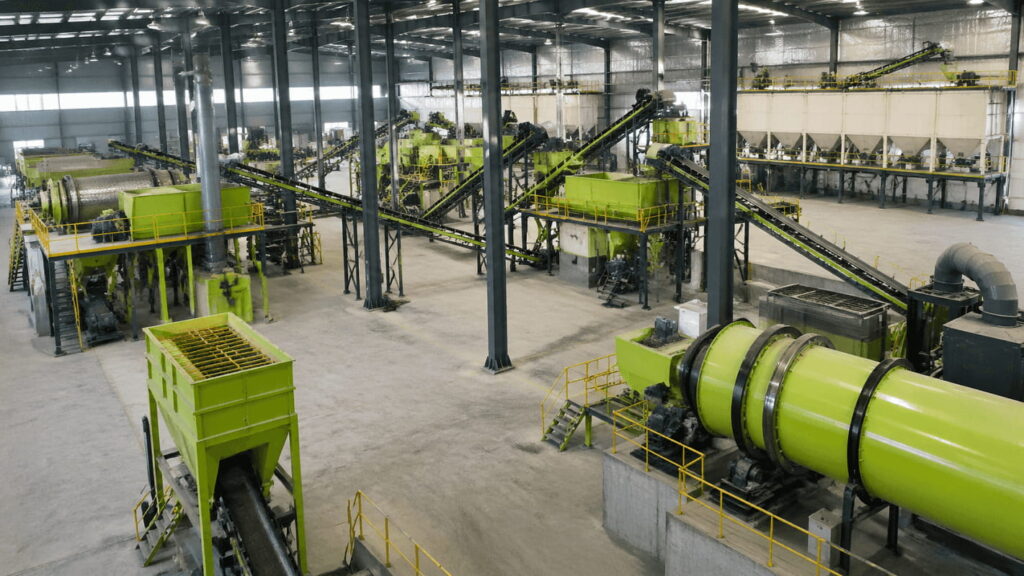
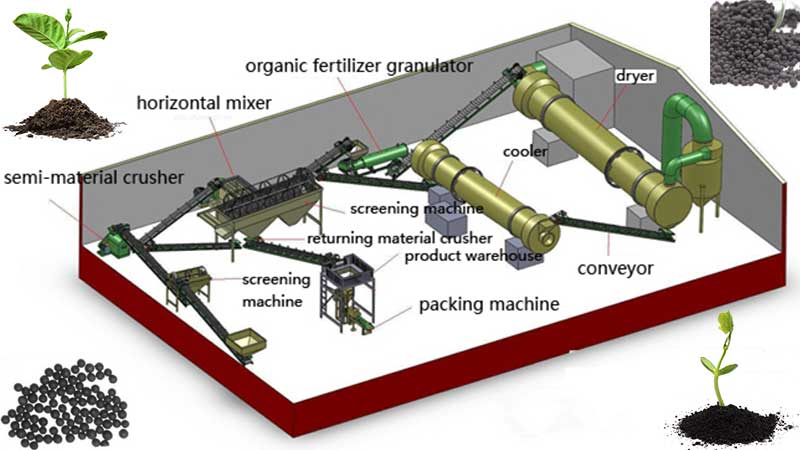
A complete compound fertilizer production line isn’t just one machine. It’s an entire system.
Essential components include:
- Raw material crushers
- Mixing machines
- Granulators
- Dryers
- Coolers
- Screening machines
- Coating equipment
- Packaging machines
Each piece adds to your total investment. And here’s the thing: skimping on quality to save money upfront usually backfires.
(Trust me, replacing a cheap crusher every year costs way more than buying a good one from the start.)
4. Automation Level
Want a fully automated system with computerized controls?
That’ll add 15-25% to your base price. But the labor savings and improved consistency often justify the extra cost.
Compound Fertilizer Production Line Price: Real-World Examples
Let me share some actual price ranges from the market:
Example 1: Small NPK Powder Line (1-3 t/h)
- Basic mixing and packaging only: $10,000-$25,000
- Simple powder production with crushing: $25,000-$40,000
- Basic granulation capability: $40,000-$80,000
Example 2: Medium NPK Granulation Line (10 t/h)
- Rotary drum granulation system: $120,000-$150,000
- Includes full drying and cooling: Yes
- Automation level: Semi-automatic
- Annual capacity: ~30,000 tons
Example 3: Large Industrial Setup (25-30 t/h)
- Complete granulation plant: $400,000-$460,000
- Advanced control systems: Included
- Multiple granulation options: Yes
- Annual capacity: 75,000-90,000 tons
Pro Tip: These prices typically include equipment only. Don’t forget to budget for installation (10-15% of equipment cost), site preparation, and working capital.
How to Choose the Right Production Line for Your Budget
Here’s my practical approach to selecting a compound fertilizer production line:
Step 1: Calculate Your Required Capacity
Don’t just guess. Do the math:
- What’s your target market size?
- How many tons per month do you need to produce?
- What’s your growth projection for the next 5 years?
I’ve seen too many businesses buy too small and regret it within a year.
Step 2: Decide on Your Product Type
Will you produce:
- NPK granules?
- Organic-mineral compounds?
- Specialized formulations?
- Water-soluble fertilizers?
Different products require different equipment configurations.
Step 3: Consider Your Raw Materials
Your raw material choices directly impact equipment needs.
If you’re using materials that need significant size reduction, you’ll need powerful crushers. Working with hygroscopic materials? Better invest in good drying equipment.
Step 4: Evaluate Granulation Options
For budget-conscious buyers: Dry granulation (roller compaction) offers the lowest initial investment.
For premium products: Wet granulation produces more uniform, attractive granules that command higher prices.
Smart Ways to Optimize Your Investment
Want to get the most bang for your buck? Here’s what I recommend:
1. Start with Blending, Add Granulation Later
If capital is tight, consider starting with a BB (bulk blending) fertilizer line.
The numbers:
- BB fertilizer line (10 t/h): $50,000-$80,000
- Full granulation line (10 t/h): $120,000-$150,000
You can always add granulation capabilities as your business grows.
2. Buy Quality Where It Counts
Some equipment is worth spending extra on:
- Granulators (the heart of your operation)
- Screens (directly affect product quality)
- Mixers (ensure nutrient uniformity)
Other areas where you can save:
- Conveyors (standard models work fine)
- Simple hoppers and bins
- Basic packaging for bulk sales
3. Consider Used Equipment Strategically
Here’s the deal with used equipment:
Good candidates for buying used:
- Dryers and coolers (simple, robust design)
- Conveyors and elevators
- Storage bins
Always buy new:
- Granulators (wear items, precision required)
- Control systems (technology changes fast)
- Crushers (wear and efficiency issues)
Hidden Costs Nobody Talks About
The equipment price is just the beginning. Here are costs that catch buyers off guard:
Installation and Commissioning: 10-15% of equipment cost
Foundation and Civil Work: Can equal 20-30% of equipment cost for large systems
Utilities Hookup: Electrical upgrades alone can cost $20,000-$50,000
Working Capital: You’ll need 2-3 months of raw material inventory
Permits and Compliance: Environmental permits can take months and cost thousands
Training and Startup: Budget for 2-4 weeks of supervised operation
Regional Price Variations
Compound fertilizer production line prices vary significantly by region:
China: Lowest equipment costs, 30-50% less than Western suppliers
Europe: Highest prices but excellent quality and support
India: Good middle ground, 20-30% less than European prices
Local vs. Import: Importing can save 30-40% but adds shipping, duties, and support challenges
ROI Considerations
Let’s talk returns.
A well-run compound fertilizer production line typically achieves:
- Gross margins: 25-35%
- Payback period: 2-4 years
- ROI: 20-30% annually
But here’s what affects your profitability:
Raw material costs (60-70% of production cost)
Local fertilizer prices
Production efficiency
Product quality and branding
Making the Final Decision
The bottom line?
The right compound fertilizer production line price for you depends on your specific situation. Don’t just buy the cheapest option. And don’t overspend on capacity you won’t use.
Here’s my advice:
- Start with a realistic business plan
- Get quotes from at least 3 suppliers
- Visit working installations if possible
- Factor in ALL costs, not just equipment
- Plan for growth but don’t overextend
Remember: The goal isn’t to spend the least money. It’s to build a profitable, sustainable fertilizer business.
Ready to Take the Next Step?
Investing in a compound fertilizer production line is a big decision. But with the right approach, it can transform your agricultural business.
Whether you’re looking at a $50,000 blending system or a $500,000 granulation plant, the key is matching your investment to your market opportunity.
Take time to research. Run the numbers carefully. And don’t hesitate to ask suppliers tough questions about total costs, support, and real-world performance.
The global fertilizer market is growing. Food security demands better nutrient management. And efficient compound fertilizer production is more important than ever.
With the insights from this guide and careful planning, you’re ready to make an informed decision about your compound fertilizer production line investment.
The opportunity is there. Now it’s time to seize it.


 English
  Spanish
  French
  Russian
  German
  Italian
  Turkish