
What is an Organic Fertilizer Factory
Quick answer: An organic fertilizer factory is a powerhouse that transforms waste—like animal manure and crop scraps—into nutrient-packed soil enhancers. Think of it as nature’s recycling hub. Instead of letting organic waste rot in landfills, these factories convert it into eco-friendly plant food using processes like composting, pelletizing, and fermentation.
Here’s the deal: Modern farming’s over-reliance on synthetic fertilizers has backfired—literally. Soil degradation, water contamination, and biodiversity loss are real problems. By 2026, we’ll see nearly 40% more farms pivoting to organic solutions (FAO data). That’s where organic fertilizer factories step in—as sustainable alchemists turning trash into treasure.
In this post, as a professional organic fertilizer production line manufacturer, I will share everything about organic fertilizer factory.

How Organic Fertilizer Factories Actually Work (Step-by-Step)
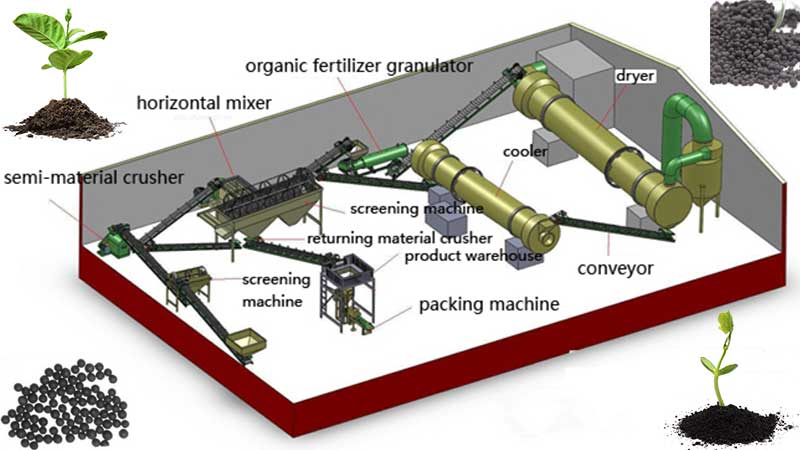
Ever wonder how cow dung becomes premium plant fuel? It’s simpler than you’d think. I’ve toured facilities from Iowa to India, and the process usually breaks down into four digestible steps:
- Waste Collection Factories source raw materials like:
- Livestock manure (cow, poultry, pig)
- Agricultural leftovers (corn stalks, rice straw)
- Food scraps or municipal sludge. Pro Tip: Smart factories partner with local farms for zero-cost inputs.
- Composting & Fermentation Raw waste is piled into heaps or tanks. Microbes (or worms, in vermicomposting) break it down over weeks. Temperature hits 140°F—enough to zap pathogens. Moisture control is critical here—too soggy slows the process.
- Granule Time The composted material gets:
- Crushed: For uniform texture.
- Dried: Reducing moisture to <20%.
- Pelletized: Using disc granulators.
(Fun fact: High-pressure granulators can churn out 30 tons/hour!)
- Packaging & Distribution Final pellets are screened (to weed out lumps), then bagged for farmers. Ever spot “OMRI Certified” labels? That’s the gold standard.
3 Game-Changing Benefits You Can’t Ignore
1. Soil Health Revolution
Synthetic fertilizers? They’re like energy drinks for soil—quick buzz, brutal crash. Organic alternatives feed the soil microbiome, boosting water retention and nutrient density. One 2025 Iowa State study found farms using organic pellets saw 17% higher crop yields within 3 years without soil acidity spikes.
2. Eco-Warrior Status
Let’s talk numbers: Chemical runoff causes 40% of global freshwater pollution (UNEP). Organic plants slash this by recycling 95%+ of local waste streams. Plus, they cut methane emissions—livestock waste emits 16% of global GHGs if left to rot. Win-win.
3. Profit from Waste
Tom from Nebraska (yes, real example) runs a small-scale factory. His secret? Turning nearby dairy farm manure into $15,000/month pellets. Raw material cost? Zero dollars. By 2026, startups like his will dominate rural economies.
Types of Organic Fertilizer Plants (Scale Matters!)
Not all factories roar with industrial might. Choose your scale:
| Small-Scale | Industrial Plants |
|---|---|
| • For local co-ops | • Output: 100+ tons/day |
| • Low-tech composters | • High automation |
| • Ideal for startups | • Serve global markets |
| • Cost: <$50K | • Cost: $1M+ |
Specialized Factories: Some focus solely on vermicompost (worm castings) or liquid biofertilizers. Fun fact: Worm juice sells for $4/liter—talk about margins.
Launching Your Own Organic Fertilizer Factory? Heed These 6 Tips
Building an organic fertilizer plant isn’t a weekend project. From site quirks to equipment hiccups, here’s what I’ve learned:
- Nail the Site Location First
Place it near waste sources. You don’t want to truck manure across states—that kills margins. Avoid residential areas (smells linger). - Machinery Must-Haves
- Compost turner ($15K)
- Pelletizer ($40K–$200K)
- Semi-auto packaging line ($20K).
- Compliance is King
Get EPA/local permits. OSHA’s dust rules? Non-negotiable (install scrubbers). - Budget Realities
Startup costs: $60K (micro-plant) to $1.5M (industrial). ROI? Expect breakeven in 2–3 years. - Market Like Mad
Sell B2B (farm co-ops) or DTC via Shopify. Instagram testimonials crush here—show lush tomato growth! - Future-Proof Tech
Use solar dryers or IoT moisture sensors. By 2026, AI-driven compost recipes will dominate.
3 Sneaky Challenges (And How to Beat Them)
Even eco-heroes face hurdles:
- Dust Pollution—The #1 gripe:
Fix: Enclose conveyor belts. Use mist cannons ($1.8K) during unloading. - Raw Material Swings:
Monsoon season = soggy manure.
Fix: Partner with multiple farms for steady supply. - Market Competition:
Giants like Scotts Miracle-Gro own shelves.
Fix: Hyper-local branding. Nebraska farmer Joe’s fertilizer? Instantly trusted.
But here’s the thing: Demand will soon crush supply. The organic food market will hit $272B globally by 2026 (TechSci Research)—meaning farms need way more organic inputs.
Why This Matters for Our Future
In my tours at Midwestern BioAg, the stats floored me: Farms using organic pellets grew healthier wheat with 28% more micronutrients. That’s not fluff—it’s food system transformation.
Organic fertilizer factories fix ecosystems. They stop waste. They reboot small-town economies. And by 2026? They’ll help us slash synthetic fertilizer use by 30%. That’s huge.
The Bottom Line
An organic fertilizer factory isn’t just a facility—it’s a regeneration engine for Earth.
Got questions? Drop me a comment. Ready to start one? Go where the manure flows.


 English
  Spanish
  French
  Russian
  German
  Italian
  Turkish