
Let’s cut to the chase: You’re sitting on potential gold (well… manure… and other organic goodies). With food prices surging and farmers desperate for sustainable solutions, the commercial organic fertilizer market is exploding. Seriously—demand jumped 68% since 2021 (BioCycle Report, 2025). But how do you actually scale this sustainably—and profitably?
As a professional fertilizer production line manufacturer, I’ve analyzed dozens of successful operations. Spoiler: It’s NOT just dumping manure in a pile. Miss the science, and you risk toxic sludge, failed crops, or worse—bankruptcy. Stick with me, and I’ll walk you through the exact commercial process profitable producers use today.
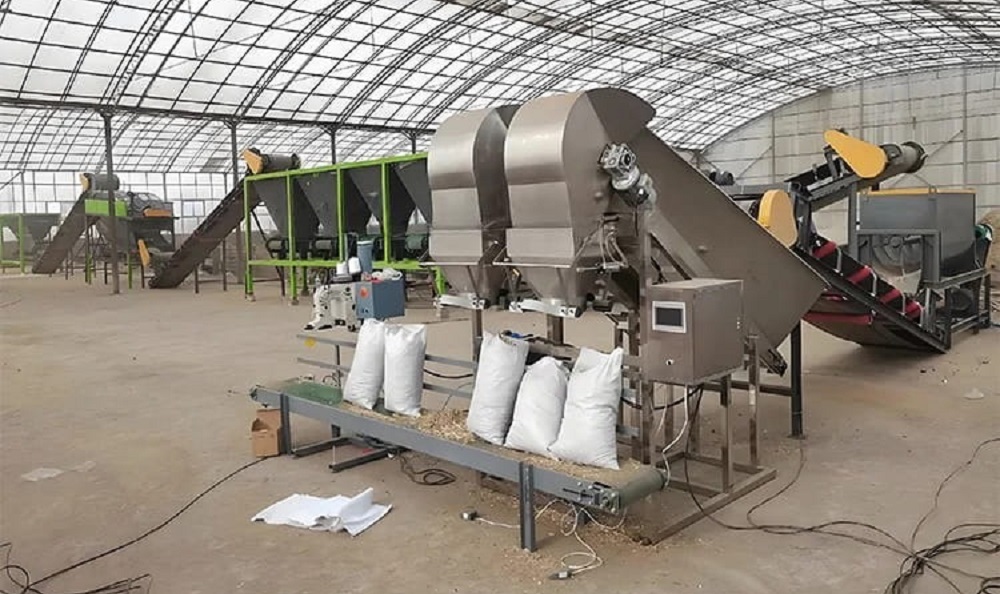
Why Commercial Organic Fertilizer Scales Fail (And How to Win)
Here’s the brutal truth: Most DIY compost methods crash at commercial volume. Foul odors? Unstable nutrient profiles? Contamination lawsuits? Yikes.
Commercial success relies on 3 pillars:
1. Consistent Quality: Buyers demand repeatable N-P-K values. Your broccoli farm client won’t tolerate wonky phosphorus levels.
2. Pathogen Elimination: Salmonella or E. coli? That’ll sink your business overnight. 3. Profit Margins: Transport costs chew profits if your product’s too heavy or messy.
Pro Tip: Start small with a 5-ton/day pilot system. Test markets before investing $500K in gear.
How to Make Commercial Organic Fertilizer
Step 1: Sourcing Raw Materials Smartly
Not all organics work equally. Mix waste streams strategically for balanced C:N ratios and mineral profiles.
| Material Type | Ideal Sources | Key Nutrients | Moisture Alert |
|---|---|---|---|
| Nitrogen-Rich | Poultry manure, slaughterhouse sludge, fish waste | 2–5% N | Often too wet (70%+) |
| Carbon-Rich | Sawdust, rice husks, shredded cardboard | High cellulose | Too dry (<40%) |
| Balancers | Distillers’ grains, mushroom compost | Minerals, microbes | Variable pH |
Critical Move: Blending for 25:1 Carbon-to-Nitrogen Ratio. Too much carbon? Decomposition crawls. Too much nitrogen? Ammonia stink bombs.
- Test samples onsite with a $250 NIR analyzer. No guessing.
- Mix batches using a front-end loader or automated feeder.
Shocking Stat: Waste haulers often PAY you to take their organics (like spent brewery grains). Your “trash” is your profit engine.
Step 2: Hot-Rod Composting (Kill Pathogens Fast!)
Aerobic fermentation is your microbial engine room. Do it right, and you annihilate pathogens and weed seeds.
The Science-Backed Protocol:
- Form windrows 6 ft high, 12 ft wide → Lets air penetrate
- Aerate obsessively with dragon-wheeled compost turners
- Turn every 72 hours → Prevents anaerobic “rot spots”
- Target 130-150°F core temp for 15+ days → Fries E. coli
- Track moisture at 50-60%. Too dry? Spray water. Too wet? Add sawdust.
Pro Tip: Insert temperature probes. Log temps digitally to prove safety to buyers.
Cost Killer: Use insulated static piles with forced aeration if space is limited. Cuts processing time by 40%.
Step 3: Granulation Magic—Profit from Premium Formats
Powder sells cheap. Granules sell at 2-5X markup. Why? Farmers HATE dusty messes. Tractors spray powdered fertilizer unevenly. Granules flow like liquid gold through spreaders.
| Granulator Type | Best For | Throughput | Startup Cost |
|---|---|---|---|
| Disc Pelletizer | Micro-nutrient blends | 1-6 t/h | $$ |
| Rotary Drum | Heavy manure-based mixes | 8-30 t/h | $$$ |
| Extrusion Press | High-density pellets | 3-10 t/h | $$$$ |
Post-Granulation Must-Dos:
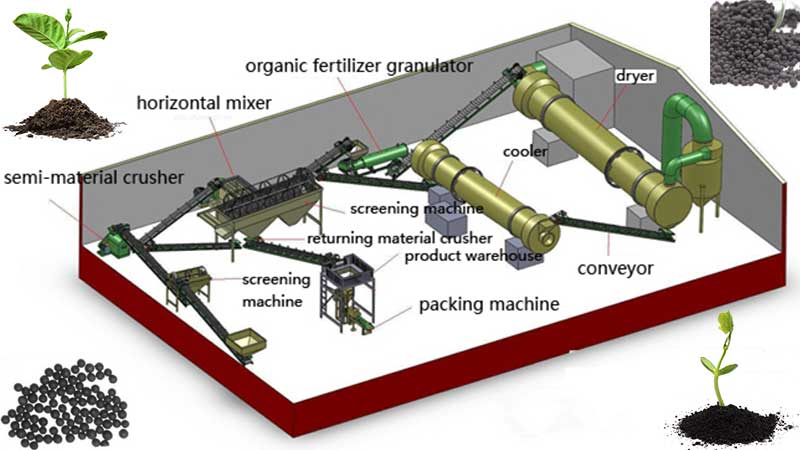
1. Fluid-Bed Drying → Reduce moisture to 14% (prevents clumping)
2. Rotary Cooling → Avoid condensation in packaging
3. Coating Machine → Apply microbial inoculants or clay dust (prevents dust-off)
Step 4: QC & Lab Testing—Don’t Skip This
Field failures = brand death. Your 2026 USDA Organic Certification depends on certified safety and nutrient specs.
Essential Tests:
- Pathogen screens: Salmonella, fecal coliforms
- Heavy metals: Lead, cadmium below 10ppm
- NPK breakdown: Via wet chemistry analysis
- Screening: Separate oversized/undersized granules
Pro Tip: Partner with local ag universities for discounted testing. Their labs are state-funded and cheaper.
Step 5: Packaging That Wins Retail Shelves
The #1 Mistake: Flimsy bags that burst or leach moisture. Farm stores will reject you.
- Use 3-layer UV-resistant poly bags with moisture barriers
- Palletize like Tetris masters → Minimize shipping volume
- Brand boldly → “100% Grass-Fed Dairy Manure Pellets” sells better than “Organic Fertilizer”
Hot 2026 Trend: Compostable starch-based bags (markup: 15-20% premium).
The Profit Math: Crunching Real Numbers
Let’s break down a 50-ton/day operation:
- Raw Material Cost: -$20/ton (often negative via tipping fees — meaning haulers pay YOU!)
- Processing: $80/ton (labor, power, equipment)
- Sales Price: $220/ton (granular) → $120/ton profit
- Gross Profit/Month: $180,000+ (at 80% capacity)
“But Brian, what about equipment costs?” Budget $220K-$450K for a medium-scale turnkey system. ROI? 12-18 months in today’s boom. 2026 demand looks even hotter.
Final Word: Your Competitive Edge
Make no mistake: Slapping “organic” on a sticky manure pile won’t cut it anymore.
Commercial winners dominate via three unshakeable habits:
1. Relentless QC testing (you’re selling trust)
2. Premium formatting (granules > powder)
3. Waste-stream partnerships (get paid to source inputs—game-changer)
The bottom line? With landfills buckling under 1.3 billion tons of organic waste yearly (FAO 2026), you’re solving a crisis—while stacking serious cash.
Now, take action:
✅ Start small with local breweries, dairies, or stables for waste partnerships
✅ Document your pathogen-kill process – market it fiercely
✅ Granulate or die. Powder is for amateurs.
Sound good? Go make that fertilizer empire—one perfectly aged compost windrow at a time.
Need gear recommendations? Here’s a snapshot of high-roi machinery I’ve seen kickstarting profitable operations like yours:
| Equipment | Model | Capacity | Price Range |
|---|---|---|---|
| Compost Turner | Scarab 1850 | 500 t/day | $65k-$120k |
| Drum Granulator | JumboFlex 3200 | 15 t/h | $145k-$180k |
| Package Line | AutoBag Pro | 1,200 bags/h | $75k-$110k |
One last gritty truth: Moisture control isn’t glamorous—but lose this battle, and your entire how to make commercial organic fertilizer venture collapses. Worth sweating. 😉


 English
  Spanish
  French
  Russian
  German
  Italian
  Turkish