
So you’re thinking about setting up a fertilizer production line in 2026?
Smart move. But let me guess – you’re probably wondering how much this whole thing is actually going to cost. And more importantly, whether it’s worth the investment.
I get it. The 2026 fertilizer production line cost analysis can feel overwhelming with all the moving parts involved. Equipment, raw materials, labor, energy costs… it adds up fast.
Here’s the deal:
In this guide, as a professional fertilizer production line manufacturer, I’ve broken down everything you need to know about fertilizer production costs in 2026. Not just the headline numbers, but the real costs that can make or break your operation.

What Makes 2026 Different for Fertilizer Production?
First things first.
2026 isn’t your typical year for fertilizer manufacturing. Energy prices are volatile. Supply chains are still adjusting. And new environmental regulations are changing the game.
The global fertilizer market hit $187.90 billion in 2025. By 2034? We’re looking at $246.67 billion.
That’s a 3.1% annual growth rate.
But here’s the thing:
Those macro numbers don’t tell you what YOUR production line will cost. Or whether you can compete profitably.
So let’s dive into the specifics.
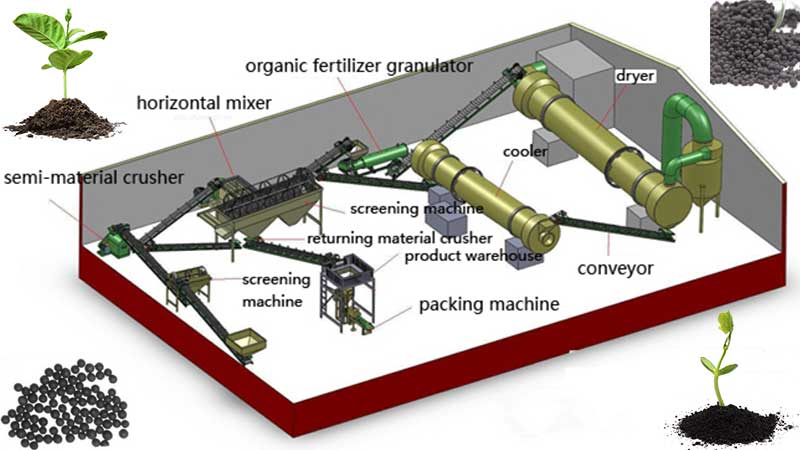
2026 Fertilizer Production Line Cost Analysis
Breaking Down the Real Costs (With 2026 Numbers)
Equipment and Capital Investment
This is where most people start. And where they often underestimate.
A 10-ton-per-hour liquid fertilizer line? You’re looking at $120,000 to $200,000 just for equipment.
But wait.
That’s just the machinery. Add in:
- Packaging line: $150,000
- Installation and setup: 15-20% of equipment cost
- Site preparation: Variable but significant
Total startup capital for a modest liquid operation? Often exceeds $1 million.
For organic fertilizer production, it gets even steeper. Total launch investment ranges from $1.57 to $1.61 million.
Here’s what that breaks down to:
- Equipment CAPEX: $425,000-$510,000
- Initial operating runway: $1 million+
The Energy Factor
Natural gas prices directly impact nitrogen fertilizer production.
Why? Because ammonia production (the base for nitrogen fertilizers) relies heavily on natural gas.
In 2026, energy costs are making up a bigger chunk of operational expenses than ever. Some facilities are seeing energy costs jump to 15-20% of total OpEx.
That’s compared to the historical 10-15%.
Pro tip: Lock in energy contracts early. The volatility in 2026 makes fixed-rate contracts worth the premium.
Monthly Operating Costs That Actually Matter
Let me paint you a realistic picture.
For a liquid fertilizer operation in 2026, you’re looking at roughly $108,450 in monthly operating costs.
That breaks down like this:
Fixed costs ($81,750/month):
- Payroll: $53,750
- Facility rent: $18,000
- Essential overhead: $10,500
Variable costs:
- Raw materials: $14,975
- Logistics: $6,700
- Sales commissions: $5,025
The kicker? Raw materials typically eat up 70-80% of your total operating expenses.
Labor Costs in Detail
That $53,750 monthly payroll covers 7 full-time employees:
- CEO/GM: $15,000
- Head of Manufacturing: $10,000
- Other essential staff: $28,750
But remember – that’s base salary only. Add 25-40% for taxes and benefits.
Your real monthly labor cost? Closer to $75,000.
Hidden Costs Nobody Talks About
Here’s where things get interesting.
Most cost analyses miss these critical expenses:
Quality Testing
Variable cost of $0.005 to $0.015 per unit. Sounds small, right?
But at full production, that’s potentially $201,000 annually.
Tariffs and Parts
Repair parts costs are up 13-16% due to tariffs. Your maintenance budget needs to reflect this.
Working Capital Requirements
You need serious cash reserves. The minimum? $566,000 by mid-2026 just to handle working capital cycles.
Why so much? Because you’re buying raw materials before you see revenue. The cash conversion cycle in fertilizer production is brutal.
Different Production Types, Different Costs
Not all fertilizer operations cost the same.
Liquid fertilizer advantages:
- Lower equipment costs
- Faster setup time
- Easier to scale
Organic fertilizer challenges:
- Higher initial investment
- More complex regulations
- Longer payback period (19 months vs 12-14 for conventional)
Granular production:
- Mid-range investment
- Higher energy costs
- Better storage stability
The Profitability Reality Check
Let’s talk margins.
Gross profit margins typically range from 20-30%. Sounds good, right?
But net profit? That’s 8-12% if you’re doing well.
The difference? All those operational costs we just covered.
Here’s the breakdown:
- Revenue: $2.01 million (projected for first year)
- Gross profit: $402,000-$603,000
- Net profit: $161,000-$241,000
That 19-month payback period for organic operations? It’s real. Plan accordingly.
Strategic Cost Management for 2026
Want to optimize your costs? Here’s what actually works:
Raw Material Strategy
- Lock in long-term contracts NOW
- Diversify suppliers (single-source is risky in 2026)
- Consider backward integration for critical inputs
Automation Investment
Spending $50,000 on automation can cut labor costs by $5,375 monthly. The ROI? Under 10 months.
Location Optimization
Your facility location impacts:
- Raw material transport costs
- Labor availability and costs
- Market access
- Regulatory compliance costs
Choose wisely. A 10% reduction in logistics costs drops straight to your bottom line.
Technology and Efficiency Gains
2026 brings new tech that can slash costs:
Smart monitoring systems:
- Reduce waste by 15-20%
- Prevent costly downtime
- Optimize energy usage
Precision application technology:
- Better product consistency
- Lower quality control costs
- Premium pricing opportunities
The investment? Usually pays back within 18-24 months.
Regulatory Compliance Costs
Environmental regulations in 2026 are stricter than ever.
Budget for:
- Emission control equipment: $50,000-$200,000
- Ongoing monitoring: $2,000-$5,000/month
- Compliance consulting: $1,000-$3,000/month
Skip these? You’re looking at fines that can kill your profitability overnight.
Market Dynamics Affecting Your Costs
The fertilizer market in 2026 isn’t just about production costs.
Consider:
- Import competition (especially from countries with cheaper energy)
- Seasonal demand swings
- Crop commodity prices affecting farmer purchasing power
Your pricing power depends on differentiation. Generic products? You’re competing on price alone.
Financial Planning That Actually Works
Here’s my framework for financial success:
Year 1: Survival mode
- Focus on cash flow, not profit
- Build customer relationships
- Refine operations
Year 2: Optimization
- Reduce per-unit costs through volume
- Negotiate better supplier terms
- Expand product line
Year 3+: Scale and profit
- Leverage established relationships
- Consider vertical integration
- Explore premium markets
Risk Management Strategies
The biggest risks in 2026?
- Energy price spikes – Hedge or lock in rates
- Raw material shortages – Multiple suppliers essential
- Regulatory changes – Stay ahead of compliance
- Market volatility – Diversified customer base
Build these protections into your business model from day one.
Making the Investment Decision
So, is a fertilizer production line worth it in 2026?
The answer depends on:
- Your capital reserves (need $1.5M+ minimum)
- Market access and relationships
- Operational expertise
- Risk tolerance
The successful operations I’m seeing share common traits:
- Strong financial backing
- Experienced management
- Differentiated products
- Efficient operations
Action Steps for 2026
Ready to move forward? Here’s your roadmap:
- Detailed feasibility study – Don’t skip this
- Secure financing – Banks want 30%+ equity
- Lock in suppliers – Before equipment arrives
- Hire key personnel – Especially production manager
- Pre-sell capacity – Reduce market risk
The bottom line?
Fertilizer production in 2026 can be highly profitable. But only if you understand and plan for the true costs involved.
The operations succeeding right now? They went in with eyes wide open, proper financing, and realistic expectations.
Your 2026 fertilizer production line cost analysis needs to account for everything – from the obvious equipment costs to the hidden working capital requirements.
Do that, and you’re positioned for success in a growing market.
Skip the details, and you’ll join the statistics of undercapitalized operations that couldn’t make it past year two.
The choice is yours. But now you know what you’re really signing up for.


 English
  Spanish
  French
  Russian
  German
  Italian
  Turkish