
Let me be blunt: gardeners waste hundreds of bucks yearly on synthetic fertilizers while sitting on a goldmine—often literally. That heap behind your local stable? That’s not waste. It’s black gold waiting to transform your soil.
I’ve personally turned barren patches into thriving vegetable havens using composted horse manure. One client even doubled her tomato yield… without spending a dime. Sound good? In this post, as a professional fertilizer production line manufacturer, let me explain why this resource deserves a spot in your garden strategy.
Quick Summary:
- Composted horse manure is an effective, balanced soil amendment that improves texture, nutrient availability and earthworm activity.
- Hot composting (130–150°F for ~2 weeks) is required to kill weed seeds and pathogens; always test for herbicide residues (cress seed test).
- Source considerations (hay herbicides, bedding type, age) and correct pile management (lasagna layering, turning schedule, curing) determine safety and speed.
- Apply conservatively (½–1 inch layers, specific pre-plant and side-dress guidelines) and avoid fresh manure to prevent nitrogen burn and weed issues.
Is Horse Manure Good for Fertilizer
Yes, decomposed horse manure is nutrient-dense soil gold that outperforms synthetics, Its slow-release 0.7-0.3-0.6 NPK provides balanced feeding without salt buildup. But fresh manure will burn plants, properly composted at 130-150°F for 2 weeks, it eliminates weed seeds and pathogens (99.9% kill rate).
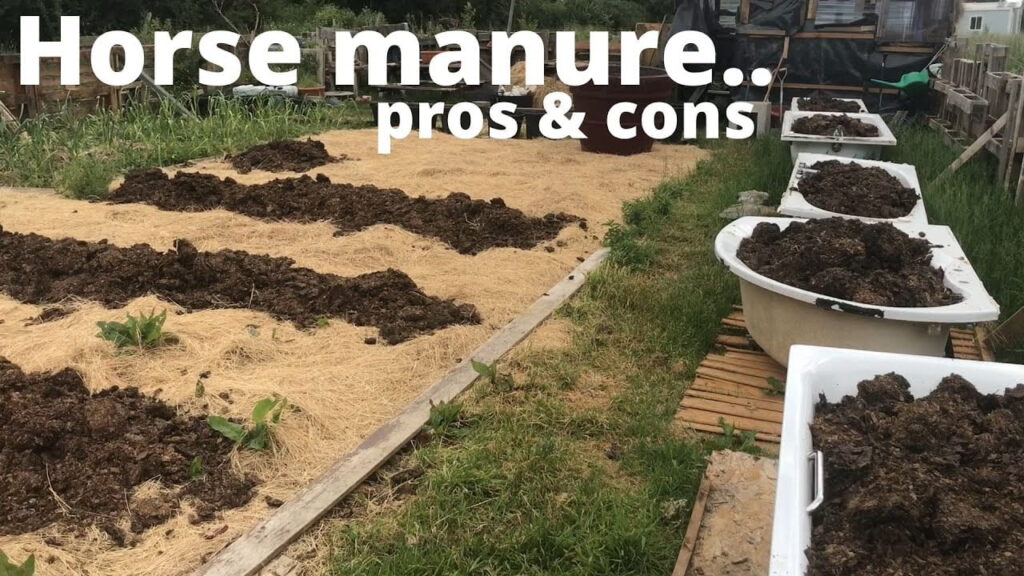
What Makes Horse Manure a Soil Superhero
Nutrient Powerhouse (Without the Burn)
Unlike chicken manure’s volcanic nitrogen levels, decomposed horse manure releases nutrients slowly. Think of it as a timed-release capsule for plants:
| Nutrient | Benefit for Plants | Compared to Other Manures |
|---|---|---|
| Nitrogen (N) | Fuels leaf growth | Lower than poultry, higher than steer |
| Phosphorus (P) | Boosts root/flower development | Similar to cow, higher than rabbit |
| Potassium (K) | Enhances drought resistance | Higher than pig, lower than goat |
| Organic Matter | Improves soil texture | Outstanding—40-70% content |
Pro Tip: Fresh horse poop packs heat—literally. Its initial nitrogen can hit 1700 ppm. Aged manure? Just 100-200 ppm. That’s why composting isn’t optional. I learned this harshly when I torched my pepper seedlings in ‘22. Don’t be me.
Soil Structure Revolution
Clay soil? Add manure. Sandy soil? Definitely add manure. Here’s why:
- Clay soils become less clumpy, improving drainage.
- Sandy soils gain water-holding superpowers.
- All soils attract earthworms. My last compost pile pulled in 28 worms per square foot. They’re nature’s tillers.
Weed Seed & Pathogen Neutralizer
But isn’t manure full of weeds? Only if raw. Proper composting at 130-150°F (54-65°C) for 2 weeks:
- Fries weed seeds 🥵
- Kills harmful bacteria (like E. coli)
- Breaks down dewormer meds
A Penn State study found hot composting reduces pathogens by 99.9%. That’s why I pile manure with straw, water it like a sourdough starter, and turn it weekly.
4-Step Horse Manure Composting Blueprint
Skip this, and you risk nuking your garden. Here’s my battle-tested method:
Step 1: Source Smart
Not all manure is equal. Ask these questions:
- “Is hay sprayed with Aminopyralid herbicides?” (They survive composting and kill tomatoes).
- “What bedding is used?” (Straw decomposes fast; wood shavings slow it down and steal soil nitrogen initially).
- “Can I take aged piles?” (Prioritize stuff that’s sat 6+ months).
Case Study: My neighbor ignored bedding type. His manure/shavings mix took 14 months to break down. Mine with straw? 5 months.
Step 2: Build the Pile Like Lasagna
| Layer | Material | Thickness | Purpose |
|---|---|---|---|
| 1 | Twigs/Stalks | 4-6 inches | Aeration base |
| 2 | Fresh manure + bedding | 8-12 inches | Nitrogen source |
| 3 | Dead leaves/grass clippings | 4-6 inches | Carbon balance |
| 4 | Existing compost/Garden soil | 2 inches | Microbe booster |
Repeat. Keep it moist as a wrung-out sponge.
Step 3: Turn & Monitor Heat
- Week 1-2: Turn pile every 3-4 days. Goal temp: 140°F+.
- Week 3-6: Turn weekly as heat drops.
- Month 3+: Let cure. Finished compost smells earthy—not sour.
Gear I Use: $20 compost thermometer. Worth every penny.
Step 4: Test Safety
Don’t skip this:
- Sprinkle cress seeds on compost.
- Wait 5 days.
- If they sprout green? Your compost is plant-safe. If yellow or dead? Herbicide contamination. Bin it.
How to Use Composted Manure Like a Pro
Vegetable Gardens
- Pre-Planting: Mix 3 inches into topsoil 4 weeks before seeding.
- Growing Season: Side-dress plants with 1 inch monthly. Keep 2” from stems!
- Fall: Blanket soil with 4 inches as mulch. Nutrients leach down by spring.
Plants that ADORE it: Corn 🌽, tomatoes 🍅, squash (they’re greedy feeders).
Plants to avoid: Carrots 🥕 (get fork-shaped) and blueberries (prefer acidic soil).
Flower Beds & Lawns
- Roses: 1 cup per bush every spring. Blooms explode.
- Lawns: Spread ¼ inch in early spring 2026 after aerating. Mow high afterward.
- Perennials: Top-dress with 2 inches annually.
Pro Tip: Brew manure tea! Steep 1 shovelful in 5 gal water for 3 days. Stir daily. Dilute 1:10. Liquid gold for seedlings.
Horse Manure vs. Other Manures: The Real Deal
| Type | N-P-K* | Decomposition Speed | Best For |
|---|---|---|---|
| Horse | 0.7-0.3-0.6 | Moderate (3-6 mo) | Gardens, soil structure |
| Cow | 0.6-0.2-0.5 | Slow (6-12 mo) | Pastures, long-term fields |
| Chicken | 1.1-0.8-0.5 | Fast (1-3 mo) | Quick nitrogen hits |
| Rabbit | 2.4-1.4-0.6 | Very fast (1-2 mo) | Container plants |
*NPK values vary based on diet/age. Always test batches!
Why horse wins: Balanced organics + fewer salinity issues. Cow manure often salts soil over time. I’ve seen it crust soil surfaces like a pretzel.
3 Tragic Mistakes (And How to Dodge Them)
Mistake #1: Using Fresh Manure
Result: Nitrogen burn 🔥 + weed explosion 🌱.
Fix: If desperate, only use fresh manure in fall on empty beds. Winter breaks it down.
Mistake #2: Ignoring Herbicide Residues
Result: Twisted tomatoes, dead potatoes.
Fix: Demand hay source info. Test every batch with cress seeds.
Mistake #3: Overapplying
Result: Phosphorus runoff polluting waterways 🚱.
Fix: Stick to ½-1 inch layers. Use soil tests every 2 years (UMass offers $15 DIY kits).
FAQs – Rapid Fire Style
Can I use horse manure for potted plants?
Yes—but blend 1:3 with potting soil. Pure compost drains poorly.
Is barn bedding (sawdust) problematic?
Only initially. Wood chips temporarily tie up nitrogen but add carbon long-term. Counteract with blood meal if planting immediately.
How much manure do horses produce?
A 1,000-lb horse drops 50 lbs daily. Enough to fertilize a 500 sq ft garden yearly. Stables often pay to remove it—ask!
Can herbivore manure transmit diseases?
Rarely. Unlike carnivores (e.g., cats/dogs), horse manure pathogens rarely infect humans. Still, wear gloves 😷.
The Manure Manifesto: Why This “Waste” Wins
Let’s cut through the stink: Horse manure isn’t just “good” fertilizer—it’s regenerative agriculture’s secret weapon. Unlike synthetics, it builds soil year after year. By 2026, farms using manure compost saw 22% higher topsoil depth (USDA).
But raw manure? A liability. Composted? Gold.
Want tomatoes that taste like sunshine? Soil that drinks rain like a sponge? That’s the power of decomposed horse manure. Start small. Grab five buckets from a local stable tomorrow. Your garden—and wallet—will thank you.
So, is horse manure good for fertilizer? Absolutely. When handled right, it’s the closest thing to garden magic you’ll find.


 English
  Spanish
  French
  Russian
  German
  Italian
  Turkish