
What Is a Fertilizer Plant?
What is a fertilizer plant? It’s an industrial facility that manufactures the nutrients your tomatoes, corn, and pretty much every crop on Earth needs to grow. These massive operations convert raw materials like natural gas, phosphate rock, and potash into the fertilizers that feed the world.
And here’s the crazy part:
Without fertilizer plants, we’d only be able to feed about half the people on the planet.
No joke.
The food you ate today? There’s a 50% chance it exists because of fertilizers produced in these facilities.
In this guide, as a professional fertilizer production line manufacturer, I’ll break down everything you need to know about fertilizer plants. How they work. What they produce. And why they’re critical for modern agriculture.
Let’s dive in.
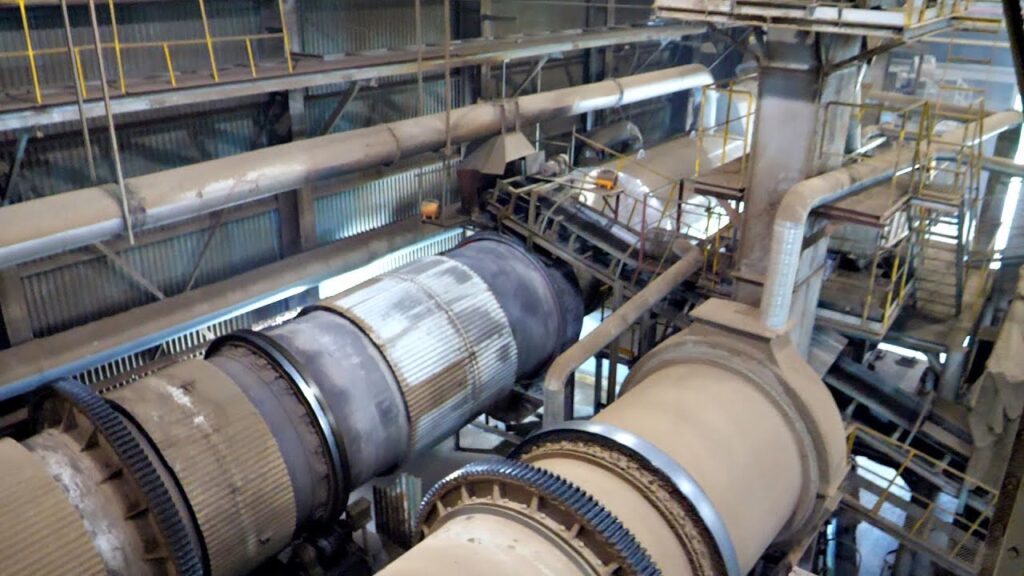
What Exactly Does a Fertilizer Plant Do?
Think of a fertilizer plant as a giant kitchen for plant food.
But instead of cooking with ingredients from your pantry, these facilities use:
- Natural gas
- Phosphate rock
- Potash ore
- Sulfur
- Various chemicals
And transform them into the three main nutrients plants crave: nitrogen (N), phosphorus (P), and potassium (K).
You’ve probably seen those three numbers on fertilizer bags at Home Depot. Like “10-10-10” or “20-5-10”.
Those numbers? They represent the NPK ratio that fertilizer plants carefully engineer.
Here’s what’s wild:
A single large fertilizer plant can produce over 1 million tons of fertilizer per year. That’s enough to fertilize about 2 million acres of farmland.
The Three Main Types of Fertilizer Production
Fertilizer plants don’t just make one type of product.
They specialize in different nutrients based on their location, raw materials, and technology.
Nitrogen Fertilizer Plants
These are the heavy hitters of the fertilizer world.
Why?
Because nitrogen is THE most important nutrient for plant growth. And these plants make it from thin air.
Literally.
The process works like this:
- Pull nitrogen from the atmosphere (which is 78% nitrogen)
- Combine it with hydrogen from natural gas
- Use the Haber-Bosch process to create ammonia (NH₃)
- Convert ammonia into other nitrogen fertilizers like urea or ammonium nitrate
This process requires MASSIVE amounts of energy. We’re talking about temperatures of 400-500°C and pressures 200 times higher than atmospheric pressure.
One ammonia plant I visited in Texas used as much natural gas as a city of 50,000 people.
Phosphorus Fertilizer Plants
These facilities start with phosphate rock – basically ancient marine deposits packed with phosphorus.
The production process is completely different from nitrogen:
- Mine phosphate rock (mainly in Florida, Morocco, and China)
- Treat it with sulfuric acid
- Create phosphoric acid
- Process into various phosphate fertilizers
The cool thing about phosphorus plants?
They often produce other valuable products as a side business. Like gypsum for drywall. Or fluoride compounds for toothpaste.
Potassium Fertilizer Plants
Potash plants are usually located right next to mines.
Why?
Because potassium fertilizers are basically refined minerals. The process is more about purification than chemical transformation:
- Mine potash ore from underground deposits
- Crush and separate the potassium chloride
- Refine to different grades
- Sometimes convert to potassium sulfate for chloride-sensitive crops
Canada produces about 30% of the world’s potash. I toured a facility in Saskatchewan that goes 1,000 meters underground. That’s deeper than three Eiffel Towers stacked on top of each other.
Inside a Modern Fertilizer Plant: The Step-by-Step Process
Let me walk you through what actually happens inside these facilities.
I’ll use an ammonia plant as an example since it’s the most complex.
Step 1: Natural Gas Reformation
First, natural gas enters massive reformer tubes.
These tubes are heated to 800°C with steam. This breaks down methane (CH₄) into hydrogen and carbon monoxide.
The reformer unit alone can be 10 stories tall.
Step 2: Shift Conversion
Next, the carbon monoxide reacts with more steam.
This creates more hydrogen and converts the carbon monoxide to CO₂.
The CO₂ gets captured and either:
- Sold to beverage companies
- Used to make urea fertilizer
- Stored underground
Step 3: Gas Purification
Here’s where it gets technical.
The gas stream needs to be ultra-pure. Even tiny amounts of impurities can poison the catalyst in the next step.
Special scrubbing systems remove:
- Remaining CO₂
- Sulfur compounds
- Water vapor
- Other trace contaminants
Step 4: Ammonia Synthesis
This is the heart of the operation.
Hydrogen and nitrogen enter a synthesis reactor filled with iron catalyst. Under extreme pressure and temperature, they combine to form ammonia.
But here’s the kicker:
Only about 15% converts in each pass. So the unreacted gases get recycled back through the reactor. Again and again.
Step 5: Product Storage and Distribution
The finished ammonia gets stored in massive refrigerated tanks at -33°C.
From there, it’s either:
- Shipped as liquid ammonia
- Converted to urea
- Made into ammonium nitrate
- Processed into other nitrogen fertilizers
The Economics of Fertilizer Production
Running a fertilizer plant isn’t cheap.
A new world-scale ammonia plant costs $1-2 billion to build. And that’s before you buy a single molecule of natural gas.
Here’s the breakdown of operating costs for a typical nitrogen plant:
- Natural gas: 70-80% of costs
- Electricity: 5-10%
- Labor: 5-8%
- Maintenance: 5-7%
- Other: 2-5%
See why natural gas prices matter so much?
When gas prices spike, fertilizer prices follow. When Russia (a major gas supplier) invaded Ukraine, fertilizer prices tripled in some markets.
Environmental Considerations and Modern Innovations
Let’s address the elephant in the room.
Fertilizer plants have a massive carbon footprint. A single ammonia plant can emit 2 million tons of CO₂ per year.
That’s why the industry is investing heavily in cleaner technologies:
Green Ammonia
Instead of using natural gas, these next-gen plants use:
- Renewable electricity
- Water electrolysis for hydrogen
- Air for nitrogen
No fossil fuels. No CO₂ emissions.
The challenge? It costs 2-3x more than conventional production. For now.
Carbon Capture
Many plants are retrofitting carbon capture systems.
These can grab 90%+ of CO₂ emissions before they hit the atmosphere.
Process Efficiency
Modern plants squeeze every bit of efficiency from the process:
- Heat recovery systems
- Advanced catalysts
- Computer optimization
- Waste heat utilization
One plant in Louisiana recovers enough waste heat to generate 40 MW of electricity. That’s enough to power 30,000 homes.
Safety Systems and Regulations
Fertilizer plants handle seriously hazardous materials.
Ammonia can kill you in minutes at high concentrations. Nitric acid will dissolve your skin. Natural gas can explode.
That’s why these facilities have incredible safety systems:
- Gas detection sensors every few meters
- Emergency shutdown systems
- Blast-resistant control rooms
- Extensive fire suppression
- Personal protective equipment requirements
- Regular safety drills
In the U.S., fertilizer plants must comply with:
- EPA air quality standards
- OSHA safety regulations
- Department of Homeland Security requirements
- State environmental permits
- Local zoning rules
The Global Fertilizer Supply Chain
Here’s something most people don’t realize:
Fertilizer is one of the most traded commodities on Earth.
The supply chain works like this:
- Raw material extraction (gas fields, mines)
- Fertilizer production (the plants we’re discussing)
- Storage terminals (at ports and inland locations)
- Transportation (ships, trains, trucks, pipelines)
- Blending facilities (creating custom NPK ratios)
- Retail distribution (farm stores, co-ops)
- Farm application
A bag of fertilizer might travel 10,000 miles from production to field.
Future of Fertilizer Plants
The industry is changing fast.
Here’s what’s coming:
Precision Fertilizers
Plants are developing “smart” fertilizers that:
- Release nutrients slowly
- Respond to soil conditions
- Include micronutrients
- Reduce runoff
Modular Plants
Instead of massive facilities, companies are building smaller, modular plants closer to farms.
Benefits:
- Lower transportation costs
- Reduced carbon footprint
- Faster construction
- Better supply security
Alternative Feedstocks
Researchers are exploring new ways to make fertilizers:
- Biogas instead of natural gas
- Renewable electricity
- Waste materials
- Even air and water alone
Digital Integration
Modern plants use AI and machine learning to:
- Optimize production rates
- Predict maintenance needs
- Reduce energy consumption
- Improve safety
The Bottom Line on Fertilizer Plants
What is a fertilizer plant?
It’s the foundation of modern agriculture. These facilities take raw materials and transform them into the nutrients that grow our food. Without them, global food production would collapse.
They’re complex. They’re expensive. They face environmental challenges.
But they’re also evolving. New technologies are making them cleaner, safer, and more efficient.
The next time you eat a meal, remember: there’s a good chance it exists because of the fertilizers produced in these remarkable facilities.


 English
  Spanish
  French
  Russian
  German
  Italian
  Turkish