
Ever wondered how farmers get those perfect nutrient blends for their crops? It’s not magic – it’s BB fertilizer production lines doing the heavy lifting. What is bb fertilizer production line exactly? It’s a system that creates customized fertilizer blends by mixing different granular nutrients together. Think of it as a recipe mixer for plant food, but way more precise and sophisticated.
As a professional fertilizer production line manufacturer, I will share everything about BB fertilizer production in this post.
Here’s the deal:
What is a BB Fertilizer Production Line?
A BB fertilizer production line is basically a series of machines that work together to blend pre-made fertilizer granules into custom mixes. Unlike traditional fertilizer manufacturing (where you’re creating granules from scratch through chemical reactions), BB production is all about mixing existing granular fertilizers.
Here’s what makes it special:
The entire process is mechanical. No chemical reactions. No granulation. Just pure blending.
For example, let’s say a farmer needs a 15-15-15 NPK blend. With a BB production line, you’d simply mix urea granules (for nitrogen), DAP granules (for phosphorus), and potassium chloride granules in the right proportions.
Boom. Custom fertilizer blend ready to go.
The beauty? You can create literally hundreds of different formulations using the same equipment.
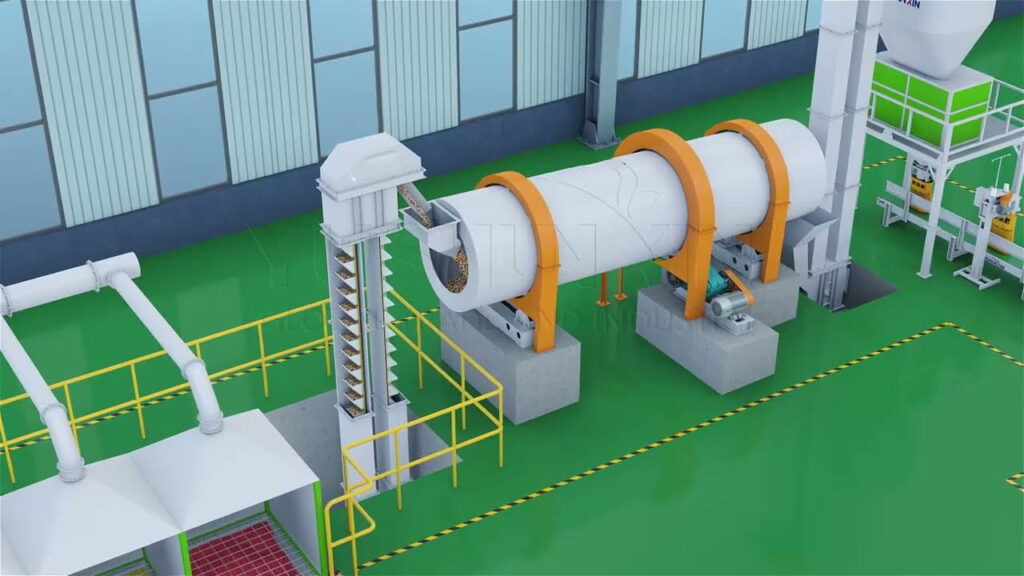
How BB Fertilizer Production Lines Actually Work
Let me break down the process for you.
A BB fertilizer production line is surprisingly straightforward. Unlike traditional fertilizer manufacturing that involves complex chemical reactions, BB production is purely physical mixing.
The process follows three main steps:
1. Batching and Measuring
First up, raw materials get measured out with scientific precision. We’re talking about ingredients like:
- Urea (for nitrogen)
- Diammonium phosphate (DAP)
- Potassium chloride
- Various micronutrients
Modern batching systems use computer-controlled scales that measure ingredients down to the kilogram. No guesswork here.
2. Mixing Magic
Next, these measured ingredients flow into specialized mixers. And this is where things get interesting.
The mixers – usually rotary drums or paddle blenders – combine everything into a uniform blend. Every granule needs to be evenly distributed. Otherwise, you’d have some plants getting too much nitrogen while others starve for potassium.
I’ve seen facilities where this mixing process takes just 3-5 minutes. That’s efficiency.
3. Packaging and Distribution
Finally, the blended fertilizer gets packaged into bags ranging from 25 to 50 kilograms. Automated packaging lines handle this step, ensuring consistent weights and proper sealing.
Why BB Fertilizer Production Lines Are Game-Changers
Here’s why farmers and fertilizer manufacturers are going crazy for BB production:
Ultimate Flexibility
Traditional fertilizer plants produce standard formulas like 15-15-15 or 10-20-10. But what if your soil needs 12-18-8?
With BB production, you can create ANY formula. Need more potassium for your tomatoes? Done. Extra nitrogen for corn? No problem.
This flexibility means:
- Custom blends for specific crops
- Formulas adjusted for local soil conditions
- Seasonal variations based on growing cycles
Cost-Effective Production
Setting up a traditional granulation plant? You’re looking at millions in investment.
A BB fertilizer production line? Way more affordable.
Here’s why:
- No need for expensive granulation equipment
- No drying systems required
- Lower energy consumption
- Minimal chemical processing
Small-scale operations can get started with investments as low as $50,000. That’s a game-changer for local fertilizer suppliers.
Faster Turnaround Times
Traditional fertilizer manufacturing can take days. BB production? Hours.
Since there’s no chemical reaction or drying time, you can go from raw materials to packaged product in the same day. That means:
- Quick response to customer orders
- Reduced inventory requirements
- Fresh product delivery
The Equipment That Makes It All Happen
Let’s dive into the actual machinery involved.
Automatic Batching Systems
These are the brains of the operation. Modern batching systems feature:
- Multiple material hoppers
- Load cells for precise weighing
- PLC control systems
- Recipe storage capabilities
The best systems achieve accuracy within 0.5% of target weights. That precision matters when you’re dealing with crop nutrition.
BB Fertilizer Mixers
Not all mixers are created equal. BB production requires specialized equipment that:
- Prevents granule breakage
- Ensures uniform distribution
- Minimizes dust generation
- Operates at optimal speeds
Horizontal ribbon mixers and rotary drum blenders dominate the market. Each has its strengths depending on production volume and material characteristics.
Conveying Equipment
Moving materials between stages requires careful handling. Belt conveyors, bucket elevators, and screw conveyors each play specific roles in maintaining product quality.
Packaging Systems
Automated packaging lines include:
- Multi-head weighers
- Bag filling stations
- Heat sealers
- Palletizing equipment
Real-World Applications and Success Stories
I’ve seen BB fertilizer production lines transform local agriculture markets.
Take the Midwest corn belt, for example. Farmers there deal with varying soil types across their fields. One BB facility I visited produces over 50 different formulas throughout the growing season. Each blend targets specific field conditions identified through soil testing.
The results? Yield improvements of 10-15% compared to standard fertilizers.
Another example comes from specialty crop regions. Vegetable growers need different nutrients at different growth stages. BB production lines allow them to get transplant starters, growth boosters, and finishing blends – all from the same facility.
Common Challenges and Solutions
Let’s be real – BB fertilizer production isn’t without challenges.
Segregation Issues
Different materials have different densities and particle sizes. This can lead to segregation during handling and transport.
The solution? Careful raw material selection and proper equipment design. Modern mixers include features like:
- Anti-segregation baffles
- Controlled discharge rates
- Gentle handling systems
Moisture Management
Some raw materials, especially urea, love to absorb moisture. This can cause caking and handling problems.
Smart operators address this through:
- Climate-controlled storage
- Moisture barriers in packaging
- Anti-caking agents when necessary
Quality Control
Ensuring consistent blends requires vigilant quality control. This includes:
- Regular sampling protocols
- Laboratory testing equipment
- Statistical process control
- Batch tracking systems
Investment Considerations for BB Fertilizer Production
Thinking about setting up your own BB facility? Here’s what you need to know.
Capacity Planning
BB production lines come in various sizes:
- Small scale: 5-10 tons/hour
- Medium scale: 10-30 tons/hour
- Large scale: 30-100 tons/hour
Choose based on your market size and growth projections. Starting smaller and expanding is often smarter than overbuilding initially.
Location Factors
Successful BB operations consider:
- Proximity to raw material suppliers
- Transportation infrastructure
- Target market accessibility
- Utility availability
Regulatory Requirements
Different regions have varying regulations for fertilizer production. Key considerations include:
- Manufacturing licenses
- Product registration
- Environmental permits
- Safety compliance
The Future of BB Fertilizer Production
The industry is evolving rapidly. Here’s what’s coming:
Precision Agriculture Integration
Modern BB facilities are connecting with precision ag systems. Imagine:
- Soil test data directly informing blend formulas
- GPS-mapped application recommendations
- Variable rate application support
Automation Advances
AI and machine learning are entering BB production. Future systems will:
- Predict optimal blend formulas
- Automate quality adjustments
- Optimize inventory management
Sustainability Focus
Environmental concerns are driving innovation:
- Enhanced efficiency fertilizers
- Organic and bio-based raw materials
- Reduced carbon footprint operations
Making BB Fertilizer Production Work for You
Success in BB fertilizer production requires more than just equipment. You need:
Market Understanding
Know your customers’ needs:
- Conduct regular soil testing
- Understand local crop patterns
- Track nutrient removal rates
- Monitor yield results
Technical Expertise
Invest in knowledgeable staff who understand:
- Nutrient interactions
- Blending principles
- Equipment operation
- Quality control procedures
Customer Service Excellence
BB production is ultimately a service business. Excel at:
- Custom formula development
- Timely delivery
- Technical support
- Results tracking
Wrapping It Up
So, what is bb fertilizer production line? It’s your ticket to providing farmers with exactly what their crops need, when they need it. No more generic fertilizers that sort of work. With BB production, you’re delivering precision nutrition that drives real results.
The technology is proven. The investment is reasonable. The market demand is growing.
Whether you’re a fertilizer manufacturer looking to expand capabilities or an entrepreneur seeing opportunity in agricultural inputs, BB fertilizer production lines offer a compelling path forward.
The bottom line? BB fertilizer production lines represent the future of crop nutrition – flexible, efficient, and perfectly tailored to modern farming needs. And in an industry where every percentage point of yield matters, that precision makes all the difference.


 English
  Spanish
  French
  Russian
  German
  Italian
  Turkish