
So you’re thinking about getting into the organic fertilizer business.
Smart move.
The organic fertilizer market is exploding right now. And for good reason: farmers are ditching chemical fertilizers left and right.
But here’s the thing:
Figuring out organic fertilizer making machine price can feel like solving a puzzle blindfolded.
I get it. When I first started researching fertilizer equipment, the pricing was all over the map. Some manufacturers wouldn’t even give me a straight answer without five phone calls.
That’s why I put together this guide.
In this post, as a professional fertilizer production line manufacturer, I’ll break down exactly what you can expect to pay for organic fertilizer making equipment in 2026. Plus, I’ll show you how to get the best bang for your buck.
Let’s dive in.
Quick Summary:
- Organic fertilizer equipment costs vary from $300 for basic composters to $550,000+ for automated production lines.
- Complete powder production lines start at $20,000-$45,000, while granular systems run $100,000-$150,000.
- Factor in an additional 20-30% for hidden costs like installation, shipping, and training.
- With proper planning, most operations see ROI within 6-12 months and profit margins of 15-30%.
What Determines Organic Fertilizer Equipment Costs?
Before we talk numbers, you need to understand what drives the price of these machines.
(Because once you know this, you can make smarter buying decisions.)
Here are the main factors:
1. Production Scale
This is the biggie.
A small composting setup for your farm? That might run you $300-$1,000.
A full industrial production line? You’re looking at $100,000 to $500,000+.
The capacity you need directly impacts your investment.
2. Automation Level
Manual equipment = lower price.
Fully automated systems = higher price.
But here’s the kicker: automated systems often pay for themselves through labor savings.
3. Machine Type
Different organic fertilizer processes need different equipment:
- Composting turners
- Granulators
- Screening machines
- Packing equipment
Each has its own price range.
4. Quality and Brand
Just like buying a car, you’ve got budget options and premium brands.
(Pro tip: Don’t always go for the cheapest. I learned that the hard way.)
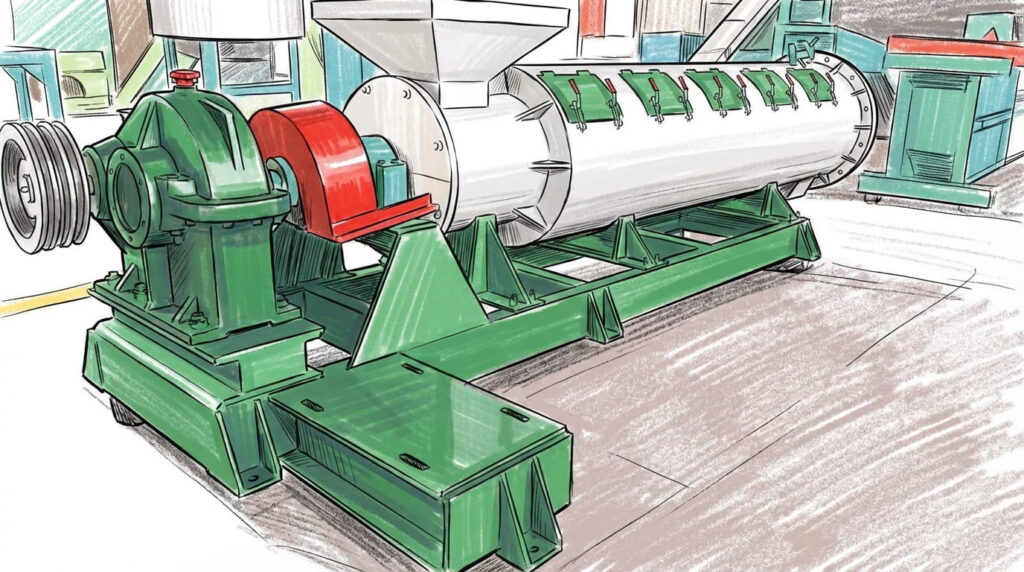
Organic Fertilizer Making Machine Price
Small-Scale Organic Fertilizer Machine Prices
Let’s start with the equipment most small farmers and gardeners ask about.
Kitchen Composters ($300-$1,000)
These compact units are perfect for:
- Restaurants
- Small farms
- Home gardeners
They turn food waste into fertilizer in just hours.
I’ve seen decent electric composters starting around $300. The fancy ones with multiple chambers and app controls? Those hit $1,000.
Manual Composting Equipment ($60-$500)
Tumbling composters are your entry point.
No electricity needed. Just load, turn, and wait.
Basic models start at $60. Heavy-duty tumblers for small farms run $300-$500.
Small Crushers and Shredders ($1,300-$1,800)
These machines break down dried organic matter into usable fertilizer.
Perfect for processing:
- Dried manure
- Crop residues
- Yard waste
Most small crushers fall in the $1,500 range.
Commercial Organic Fertilizer Production Equipment
Now we’re talking serious business.
Commercial operations need specialized machinery. And the prices reflect that.
Compost Turners ($5,000-$35,000)
These are the workhorses of any composting operation.
Small self-propelled models: $5,000-$10,000
Crawler-type turners: $20,000-$35,000
The crawler types handle massive compost windrows. We’re talking 2,000+ cubic meters per hour.
Granulators ($5,000-$30,000)
The fertilizer granulators turn powder into pellets.
Why does this matter?
Pelletized fertilizer:
- Stores better
- Spreads more evenly
- Commands higher prices
Disc granulators: $5,000-$15,000
New-type organic granulators: $10,000-$30,000
The new-type models offer better efficiency and pellet quality.
Fermentation Tanks ($20,000-$100,000)
Want to speed up composting from months to days?
You need a fermentation tank.
These bad boys control temperature, moisture, and aeration automatically. Industrial models range from $20,000 for basic units to $100,000+ for large-scale systems.
Complete Production Line Pricing
Here’s where it gets interesting.
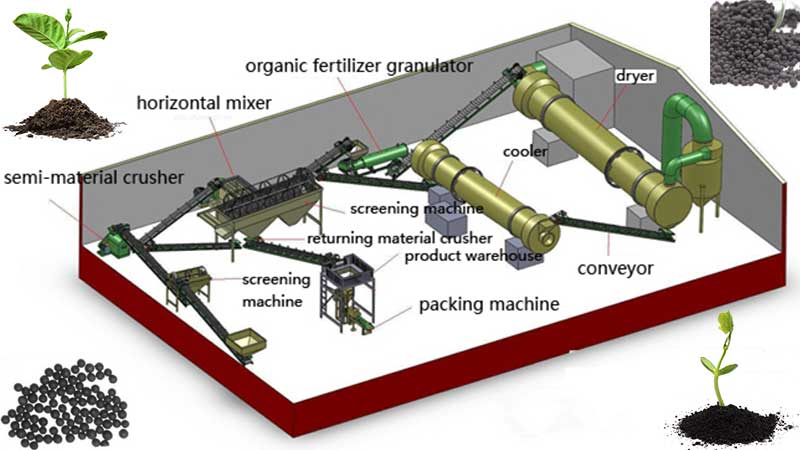
Most serious producers don’t buy individual machines. They invest in complete production lines.
Powder Production Lines ($20,000-$45,000)
The most economical option.
A 1-5 tons/hour powder line includes:
- Compost turner
- Crusher
- Screening machine
- Packing equipment
Total investment: $20,000-$45,000
This setup produces basic powdered organic fertilizer. Nothing fancy, but it gets the job done.
Granular Production Lines ($100,000-$150,000)
Want to make professional-grade pellets?
A 1-5 tons/hour granular line adds:
- Mixer
- Granulator
- Dryer
- Cooler
- Coating machine
Investment range: $100,000-$150,000
The higher price tag comes with higher profit margins. Granular fertilizer typically sells for 2-3x more than powder.
Large-Scale Plants ($350,000-$550,000)
For 10-20 tons/hour capacity, you’re looking at serious money.
But here’s the thing:
These plants are fully automated. You’re basically running a factory.
Complete systems at this scale include:
- Multiple production lines
- Advanced control systems
- Quality testing equipment
- Automated packaging
Hidden Costs Nobody Talks About
The machine price is just the beginning.
(I learned this lesson after my first equipment purchase.)
Factor in these additional costs:
Installation and Setup: 5-10% of equipment cost
Shipping: Can be $5,000-$20,000 for large equipment
Site Preparation: Concrete foundations, electrical work
Training: Your team needs to know how to operate everything
Spare Parts: Budget 5% annually for maintenance
The bottom line?
Add 20-30% to the equipment price for total investment.
Money-Saving Tips for Equipment Buyers
Want to get more bang for your buck?
Here’s what I’ve learned:
1. Start Small, Scale Up
Don’t buy a $500,000 plant if you’re just starting.
Begin with essential equipment:
- Crusher
- Granulator
- Basic packaging
Add automation and extras as you grow.
2. Consider Used Equipment
Quality used machines can save 30-50%.
Just make sure to:
- Inspect thoroughly
- Check maintenance records
- Verify parts availability
3. Buy Direct from Manufacturers
Skip the middleman markup.
Many Chinese manufacturers offer factory-direct pricing. You can save 20-40% compared to buying through distributors.
4. Time Your Purchase
Equipment prices often drop during:
- End of fiscal year
- Trade show seasons
- Economic downturns
I’ve seen discounts up to 15% just by timing it right.
ROI and Profitability Analysis
Let’s talk numbers that matter.
A typical powder production line ($45,000 investment) can produce 25,000 tons annually.
At $200-$300 per ton, that’s $5-7.5 million in revenue.
Even with operating costs, you’re looking at:
- Profit margins: 15-30%
- ROI timeline: 6-12 months
- Annual profit: $750,000-$2.25 million
Not bad for a $45,000 investment.
Granular lines have even better margins. The higher equipment cost ($150,000) pays off through premium pricing.
Choosing the Right Supplier
This is crucial.
The right supplier can make or break your operation.
Look for:
Experience: At least 10 years in the industry
Support: Technical assistance and training
Warranty: Minimum 1-year parts warranty
References: Talk to actual customers
Customization: Ability to modify designs
Don’t just compare prices. Compare value.
Future Trends Affecting Equipment Prices
The organic fertilizer equipment market is evolving fast.
Here’s what’s coming:
Automation Integration: AI and IoT systems will become standard
Energy Efficiency: New designs use 30-50% less power
Modular Systems: Plug-and-play components for easy scaling
Green Technology: Solar-powered and zero-emission equipment
These innovations might increase initial costs but will reduce operating expenses.
Making Your Final Decision
Here’s my advice:
Start by determining your actual needs:
- Current organic waste volume
- Target production capacity
- Available budget
- Local market demand
Then work backward to find equipment that fits.
Don’t overbuy. But don’t underinvest either.
The sweet spot? Equipment that handles 20-30% more than your current needs. This gives you room to grow without overspending.
The Bottom Line
Organic fertilizer making machine price varies wildly based on your needs.
Small operations can start for under $1,000. Large commercial plants require $500,000+ investments.
But here’s what matters:
The organic fertilizer market is growing 12% annually. Demand is outpacing supply in most regions.
With the right equipment and business plan, you can tap into this growth.
Start where you are. Use what you have. Scale as you grow.
That’s how successful organic fertilizer businesses are built.
Remember: the best organic fertilizer making machine price is the one that matches your business goals and delivers solid ROI.
Now you know exactly what to expect when shopping for equipment. Use this knowledge to make smart investment decisions that grow your business.
The organic fertilizer revolution is happening. Will you be part of it?


 English
  Spanish
  French
  Russian
  German
  Italian
  Turkish